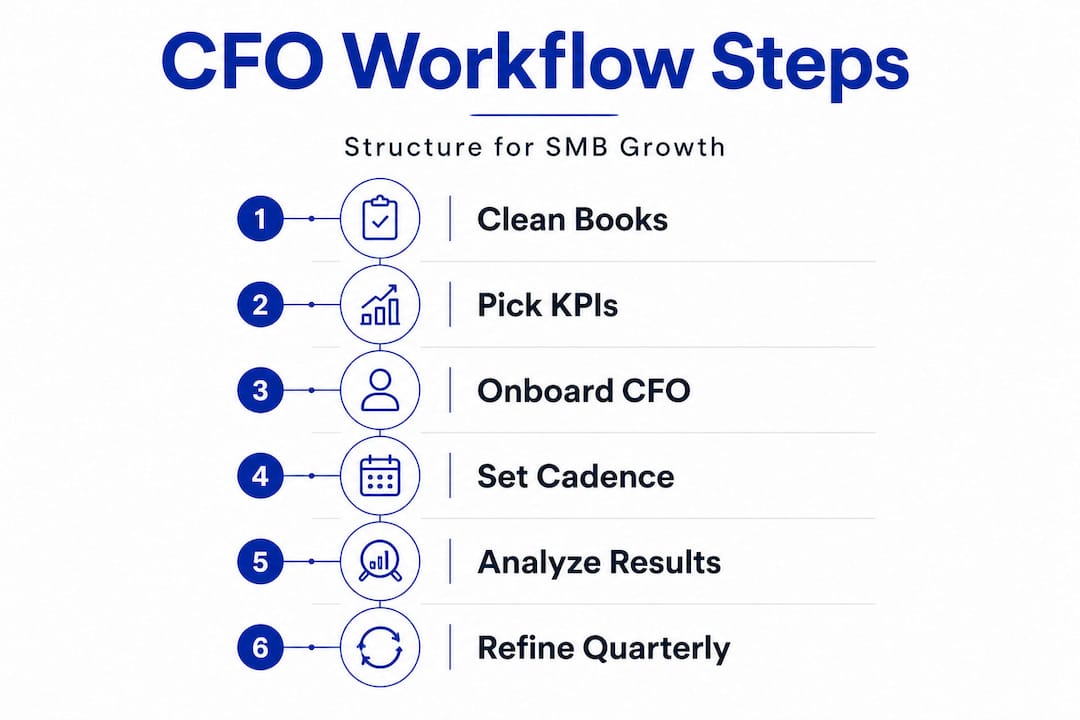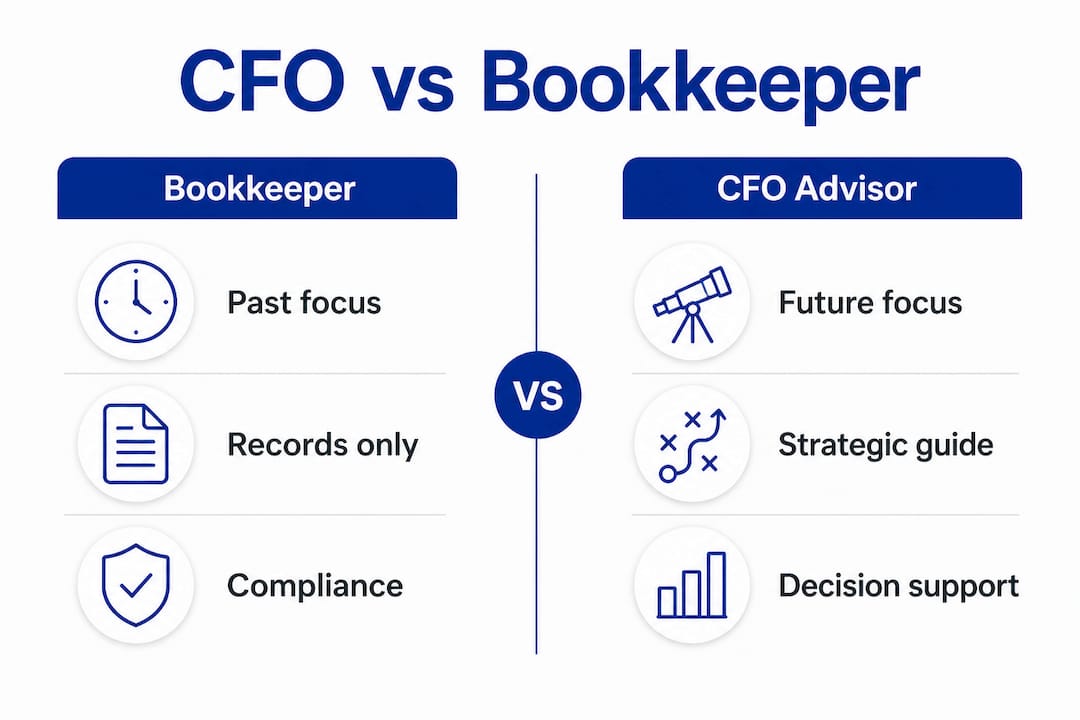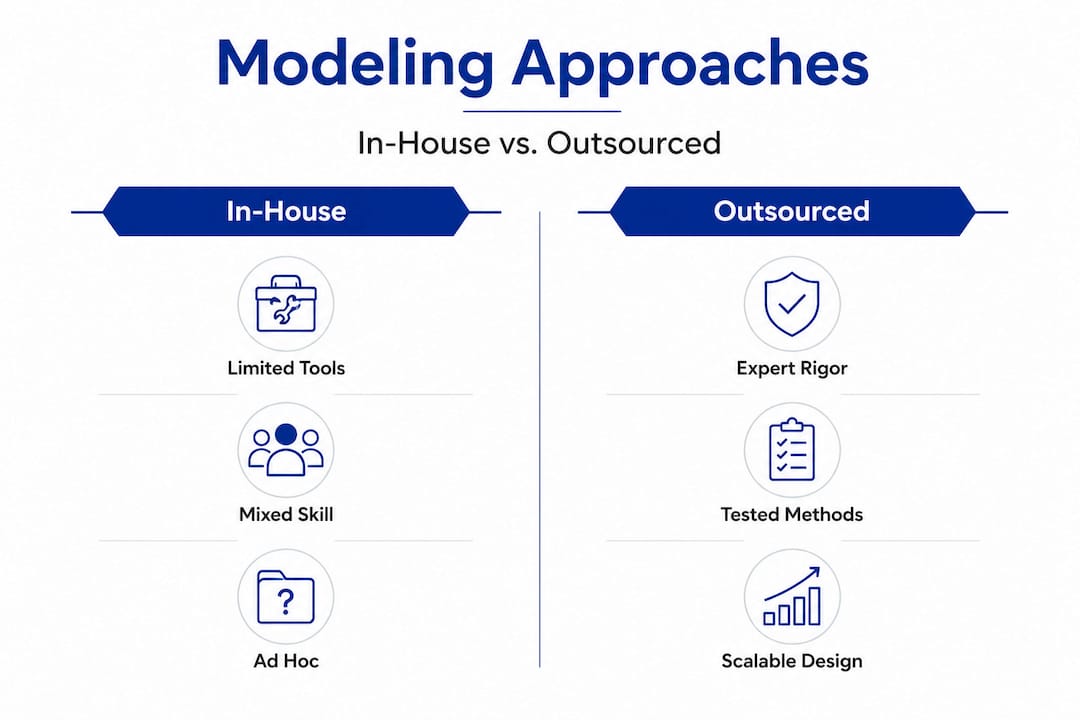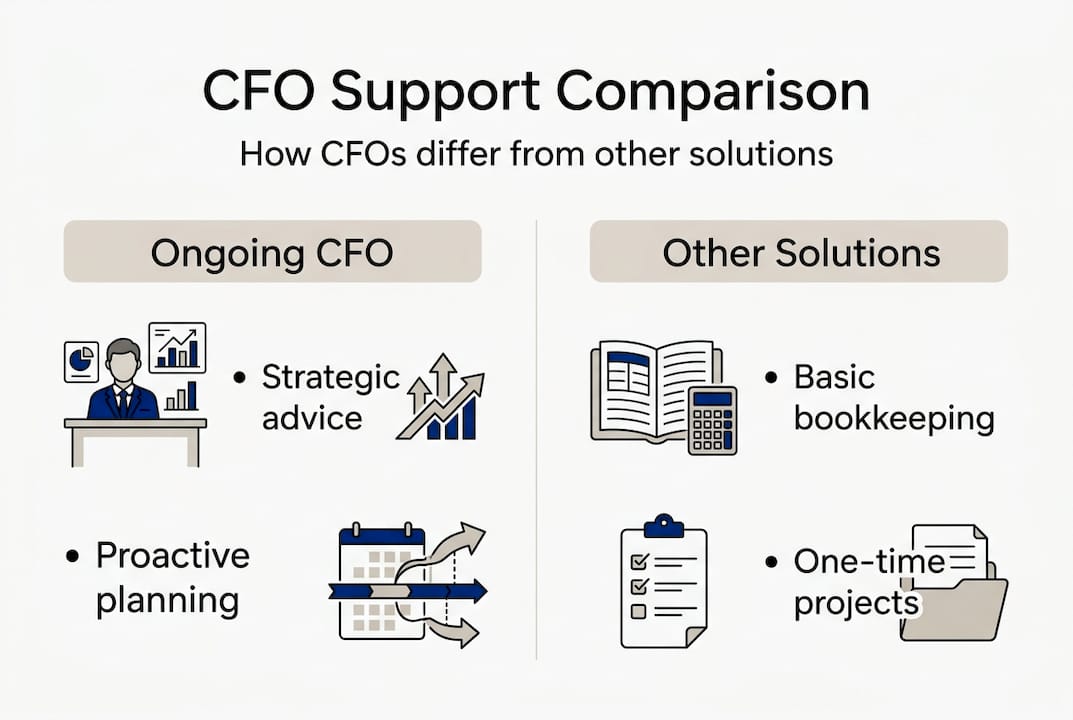
Uncategorized | John Galt

How to create financial reports that drive SMB growth

Financial Reporting Benchmarks

MetricBenchmark
Standard SMB monthly report setP&L, balance sheet, cash flow, KPI dashboard
Days to close month-end (best-in-class)5-7 business days
Days to close month-end (typical SMB)15-25 business days
Page count for a good board package10-15 pages
SMBs that get monthly financials within 10 days~35%
Material variance threshold to investigate+/- 5% on revenue, +/- 3pp on margin
Cost of bad reporting (bad decisions, fees)1-3% of revenue annually
QuickBooks Online users among US SMBs~80% of accounting market

Most SMB owners feel lost when trying to turn raw transactions into a clear picture of their business. The numbers are there — in spreadsheets, accounting software, and bank statements — but turning them into something that actually guides decisions is a different skill entirely. CFOs rely on structured, layered reports every single day to manage risk, spot opportunities, and plan ahead. The good news is that you do not need a full-time CFO to get there. This guide walks you through every stage of building financial reports that do more than satisfy your accountant.

Table of Contents

Key Takeaways

PointDetails
CFO-level reportingGoing beyond basic statements with supporting reports and KPIs unlocks strategic insights.
Avoid common errorsRegular reconciliation and accurate classification are key to reliable financial reports.
Turn reports into actionInterpret data to detect risks and opportunities for performance improvement.
Use the right toolsAccurate, timely reports require robust accounting software and consistent data sources.

Why financial reports matter for your business

Financial reports serve a purpose far beyond tax season. When built correctly, they tell you whether your business is profitable, whether you have enough cash to cover next month’s payroll, and whether you are growing in the right direction. For SMB owners juggling operations and sales at the same time, that clarity is not a luxury. It is a survival tool.

Most owners stop at the basics: a profit and loss statement, a balance sheet, and maybe a cash flow statement. Those three documents are the foundation, but they leave out a huge amount of strategic context. CFO-level reporting adds layers that explain why the numbers look the way they do, not just what they are.

Here is what better financial reporting actually gives you:

  • Better decisions. When you can see margin by product line or customer segment, you stop guessing about where to invest.
  • Growth tracking. Month-over-month and year-over-year comparisons reveal whether momentum is building or fading.
  • Investor and lender confidence. Clean, well-organized reports signal that your business is managed professionally.
  • Early warning signals. Aging receivables or a shrinking cash runway appear early in a detailed report, giving you time to act.
  • Accountability. When your team sees KPIs tracked consistently, behavior changes.

The shift from basic compliance reporting to CFO-level reporting means adding tools like accounts receivable aging, accounts payable aging, cash flow forecasting, and KPI dashboards. These reports explain working-capital timing and variance drivers, not just compliance outputs, which is the core difference between reporting for the IRS and reporting for growth.

“CFO-level reporting is not about generating more paper. It is about building a financial lens that turns historical data into forward-looking strategy.”

Essential tools and information before you start

Before you build a single report, you need the right raw material. Jumping into report creation without organized data is like baking without measuring your ingredients. You will produce something, but it probably will not be what you intended.

The core inputs every SMB needs before building financial reports include:

  • Accounting software such as QuickBooks, Xero, or FreshBooks, with all transactions recorded and categorized
  • Bank and credit card statements reconciled against your books for the reporting period
  • Invoices and receipts organized by category and date
  • Payroll records broken down by department or cost center if possible
  • Loan and liability schedules so you can accurately reflect debt obligations on the balance sheet

Beyond the basics, the supporting reports for SMBs include accounts receivable aging, accounts payable aging, budget vs. actual comparisons, and cash flow forecasting. A KPI dashboard and review is used alongside these core statements to give management a real-time pulse on the business.

Bookkeeper tracking overdue SMB invoices

Tool or resourceBest for
QuickBooks OnlineCore statements, payroll integration, bank feeds
XeroMulti-currency, clean UI, strong reconciliation tools
Google Sheets or ExcelBudget vs. actual modeling, custom KPI dashboards
Fathom or Spotlight ReportingVisual KPI dashboards, variance analysis
Bank statement exports (PDF/CSV)Reconciliation verification
Payroll platform reportsLabor cost allocation by department

Pro Tip: Build a reporting checklist at the start of each month that lists every document you need before you can close the books. This single habit cuts report preparation time in half and dramatically reduces the number of errors you have to fix later.

Investing time in your data infrastructure pays off immediately. If your transactions are misclassified or your bank feeds are outdated, every report you produce downstream will carry those errors forward. Getting clean inputs is not optional. It is the entire foundation of reliable reporting. A strong working capital optimization strategy also depends on having accurate, timely data at the start of each cycle.

Step-by-step: Building your financial report

With clean data and the right tools in hand, you are ready to build. The workflow below applies whether you are producing monthly reports for internal review or preparing a reporting package for an investor or lender.

  1. Prepare and clean your data. Run a transaction detail report from your accounting software. Look for uncategorized entries, duplicate transactions, and missing invoices. Fix these before moving forward.
  2. Classify all transactions correctly. This is where many reports break down. Misclassified expenses like payroll recorded under cost of goods sold, or capital purchases expensed rather than capitalized, distort your results significantly.
  3. Reconcile all bank and credit card accounts. Every account balance in your books should match the corresponding statement balance. Do not skip this step.
  4. Assemble the three core statements. Generate your profit and loss statement, balance sheet, and cash flow statement for the period. Review each one for obvious anomalies before moving on.
  5. Add your supporting reports. Layer in accounts receivable aging, accounts payable aging, a budget vs. actual comparison, and your cash flow forecast. These are the reports that transform a compliance package into a management tool.
  6. Review and validate. Compare this period’s results against the prior period and the same period last year. Investigate any variance larger than 10 percent before signing off.
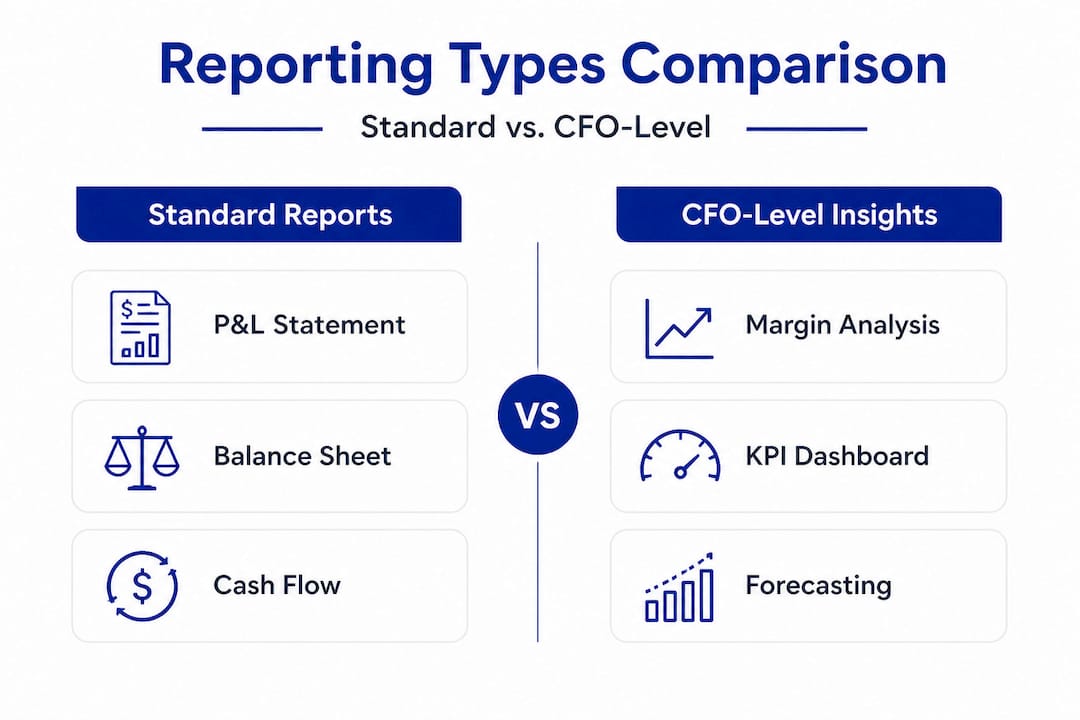
Standard compliance reportCFO-level equivalent
Profit and loss statementP&L with margin analysis by product or segment
Balance sheetBalance sheet with working capital ratio and debt schedule
Cash flow statement13-week cash flow forecast with scenario modeling
Basic trial balanceBudget vs. actual with variance commentary
Accounts receivable summaryAR aging by customer with collection status

Infographic comparing standard and CFO-level reports

The comparison above makes it clear why many SMB owners feel like their reports are not telling them enough. Standard outputs answer “what happened.” CFO-level reports answer “so what” and “what next.”

Pro Tip: Always reconcile your accounts completely before finalizing any report. Unreconciled accounts are the single most common source of report errors, and they almost always surface at the worst possible moment, like during a bank review or investor due diligence. A clean CFO support workflow builds reconciliation as a non-negotiable step, not an afterthought.

Troubleshooting and avoiding common mistakes

Even experienced bookkeepers make reporting errors. The difference between a reliable report and a misleading one often comes down to a handful of recurring mistakes that are easy to prevent once you know what to look for.

The most common financial reporting errors include:

  • Revenue recorded in the wrong period. If you receive a payment in December for work delivered in January, it belongs in January. Cutoff errors like this skew both your revenue and your tax liability.
  • Misclassified expenses. Payroll booked as a direct cost when it belongs in overhead, or repairs expensed when they should be capitalized, change your gross margin and net income in ways that are hard to trace later.
  • Manual data entry mistakes. Transposing numbers or duplicating invoices are surprisingly common and can go unnoticed for months if reconciliation is skipped.
  • Missing or late transactions. Vendor bills that arrive after the period closes, or expenses charged to a personal card, create gaps in your records that make your reports look better than they are.
  • Unreconciled accounts. If your bank account in the software does not match the actual statement, you are building every downstream report on a shaky foundation.

Typical financial report errors include revenue in the wrong period, misclassified expenses, manual data entry errors, missing or late transactions, and accounts not properly reconciled. Each of these is preventable with the right process.

“Period accuracy is not a technical detail. It is the difference between a report that guides your next decision and one that quietly misleads you for months.”

Pro Tip: Set a calendar reminder for the 5th of every month to complete your prior-month reconciliation. This creates a consistent rhythm that prevents late adjustments from piling up and makes your monthly close faster every time.

Consistent error prevention also requires reviewing your CFO-led financial analysis with fresh eyes at least once per quarter. What looks clean at a transactional level can still carry systematic classification errors that only surface when you look at patterns across multiple periods.

Turning reports into CFO-level insights

Producing clean reports is the foundation. Using them to make smarter decisions is the goal. Here is where most SMB owners stop short. They generate the numbers, file them away, and move on. A CFO treats the same documents as the starting point of a conversation.

Reading beyond the numbers means recognizing patterns. Is your gross margin contracting slowly every quarter? That is a pricing problem or a cost problem, and you need to know which. Are your receivables aging further out each month? That signals a collections process issue, not just a cash flow issue.

A KPI dashboard alongside core statements gives you a structured way to spot these patterns without having to dig through line items every time. It puts the metrics that matter most front and center.

The KPIs worth monitoring every month include:

  • Gross margin percentage by product, service line, or customer segment
  • Days sales outstanding (DSO), which measures how quickly customers pay
  • Days payable outstanding (DPO), which reflects how efficiently you use vendor credit
  • Operating cash flow ratio, comparing cash generated to current liabilities
  • Budget vs. actual variance, flagged by department or cost center
  • Customer acquisition cost vs. lifetime value, especially critical for subscription or recurring-revenue businesses

For industry-specific financial analysis, the specific KPIs shift. A services firm watches utilization rates and project margin. A product-based business tracks inventory turnover and landed cost per unit. The framework is the same, but the inputs reflect the operational realities of each model.

The power of CFO-level reporting is not in any single metric. It is in the conversation that happens when you bring several metrics together. When revenue is up but cash is flat and receivables are growing, that is a story. Your reports should tell that story clearly, every single month.

What most guides miss: The critical habits enabling CFO-level reporting

Most articles about financial reporting focus on the documents themselves. They explain what a balance sheet is, or how to categorize expenses. That is useful, but it misses the more important point. The quality of your financial reports is almost entirely a function of your habits, not your tools.

We have worked with SMB owners who had enterprise-level accounting software and still produced reports full of errors, because they recorded transactions inconsistently and skipped reconciliation whenever things got busy. We have also seen businesses using basic spreadsheets produce board-ready reporting packages because the owner treated financial discipline as a non-negotiable weekly practice.

Consistency beats sophistication in SMB reporting. Every time. A simple process done reliably produces better outcomes than a complex system used sporadically.

“A $50,000 dashboard built on inconsistent data is worth less than a well-maintained spreadsheet updated every Friday afternoon.”

The most impactful habit you can build is a weekly 30-minute financial review. Check your bank balance against your books. Review any new transactions for correct classification. Look at your receivables aging and flag anything past 30 days. This is not glamorous work, but it is the work that prevents the surprises that derail growing businesses.

The second habit is treating your month-end close as a ritual, not an emergency. Block time at the start of each month to close the prior month completely before moving on. Businesses that let multiple months accumulate before closing the books always find it harder, take longer, and introduce more errors.

What most guides also miss is that financial reporting is not a document. It is a repeatable process embedded into how you run your business. The effective CFO support workflow creates that structure so reporting becomes part of operations, not a separate project you get to when you have time.

Make financial reporting easier with expert guidance

Building CFO-level reports takes time to set up correctly, but you do not have to figure it out alone.
https://johngalt-finance.com

John Galt Finance works directly with SMB owners to build structured reporting systems, from a cash flow forecasting guide to complete monthly reporting packages that deliver the strategic clarity your business needs to grow. Whether you need a financial planning framework built from scratch or want to upgrade your existing reporting to something investor-ready, our team brings the CFO-level structure and discipline your business deserves. Explore our custom financial modeling process to see how we tailor financial tools to your specific industry and growth stage.

Frequently asked questions

What are the most important financial reports for SMBs?

SMBs should prioritize accounts receivable aging, payable aging, budget vs. actual comparisons, cash flow forecasting, and KPI dashboards alongside the three core financial statements. These reports together provide both historical accuracy and forward-looking insight.

How can I avoid common financial report errors?

Reconcile accounts at least monthly, classify transactions correctly from the moment they are recorded, and review for missing or late entries at every period close. Consistent habits eliminate the vast majority of reporting errors before they happen.

What software should I use for financial reporting?

Cloud-based platforms like QuickBooks Online or Xero handle core statements well, but always ensure your software allows data export for custom KPI dashboards and supporting reports. The best tool is the one your team actually uses consistently.

How often should SMBs create and review financial reports?

Most financial experts recommend closing books and reviewing key reports monthly, with a dedicated weekly check of cash position and receivables aging for tighter operational control.

What’s the benefit of adding a KPI dashboard to my reports?

A KPI dashboard alongside core statements surfaces trends and risks faster than reading line items, allowing owners to make better decisions more quickly without needing to interpret raw data every time.

FAQ

What financial reports should I produce every month?

The core four: P&L (with budget comparison), balance sheet, cash flow statement, and a one-page KPI dashboard. Add a 13-week cash forecast and variance commentary for executive review. Anything more becomes noise; anything less leaves blind spots.

How do I close the books faster?

Three fixes deliver 80% of the speed-up: (1) close credit card and bank feeds within 3 days, (2) automate revenue recognition rules, (3) document a 30-step close checklist with owners and deadlines. Most SMBs that close in 20 days can get to 10 in one quarter.

Should I produce financial reports myself or outsource it?

If you spend more than 10 hours/month on close and reporting as a founder, outsource. A bookkeeper at $40-75/hr or a CFO firm with controller services typically pays back through your time alone. Reserve your hours for revenue-generating work.

What’s the difference between accrual and cash-basis reporting?

Cash-basis records revenue when received and expenses when paid. Accrual records them when earned/incurred. Cash is simpler; accrual is required for accurate margins and is mandatory above $26M revenue (IRS Sec 448 threshold for 2025). Most SMBs over $1M revenue should use accrual.

How do I get the leadership team to actually read the reports?

Lead with a one-page executive summary: 3 wins, 3 risks, 3 asks. Bury the GAAP statements in appendix pages. Send the package 24-48 hours before discussion. See our financial dashboard guide for layout templates.

Share this:

How a fractional CFO drives growth and clarity

Fractional CFO Impact Benchmarks

MetricBenchmark
Average EBITDA improvement (12 months)+2-4 percentage points
Cash forecast accuracy improvementFrom +/- 30% to +/- 10% within 90 days
Close cycle improvementFrom 20+ days to 7-10 days within 6 months
Fractional CFO retainer$3,000-$10,000/month
Hours per week typical engagement10-20 hours
Typical first-year ROI3-7x fees
Revenue range fit$1M-$50M
Capital raise success rate (with CFO support)+40% vs without (CFO Selections survey)

Most small business owners assume that having a CFO in their corner is a luxury reserved for companies with hundreds of employees and eight-figure budgets. That assumption is quietly costing them money, momentum, and strategic direction. Fractional CFOs have changed the math entirely. You can now access the same caliber of financial leadership that Fortune 500 companies rely on, structured around your budget and your actual needs. This article breaks down exactly what a fractional CFO is, what they deliver, and how to use one to accelerate growth.

Table of Contents

Key Takeaways

PointDetails
Fractional CFOs are strategicThey provide high-impact financial leadership on a flexible, part-time basis.
Cost-effective expertiseBusinesses can access senior-level guidance without full-time employee overhead.
Agility for growthFractional CFOs help SMEs scale, manage complexity, and pursue new opportunities.
Clear step-by-step integrationOwners can follow practical steps to onboard and leverage this expertise efficiently.
Move beyond misconceptionsYou don’t need to hire full-time to gain the benefits of expert financial strategy.

What is a fractional CFO?

A fractional CFO is an experienced finance executive who works with your business on a part-time, contract, or project basis. You get the strategic brain without the full-time price tag. The “fractional” simply means you’re buying a fraction of their working hours rather than their entire professional life.

Most fractional CFOs come with 15 to 25 years of experience, often spanning corporate finance, investment banking, private equity, or operational finance at high-growth companies. Many have held full CFO or VP of Finance roles before choosing to work with multiple clients simultaneously. That accumulated experience is exactly what smaller businesses need access to.

The businesses that benefit most typically include:

  • Early-stage startups preparing for seed or Series A funding rounds
  • Growth-stage companies scaling from $1 million to $20 million in revenue
  • Profitable but plateauing businesses that need a fresh strategic perspective
  • Companies preparing for acquisition, sale, or merger
  • Organizations going through rapid hiring or market expansion

The arrangement differs meaningfully from a traditional hire. You’re not onboarding a full-time employee with benefits, equity, and a six-figure base salary. Instead, you’re engaging an expert on the specific financial challenges your business faces right now, and scaling that engagement up or down as your situation evolves. The fractional CFO guide at John Galt Finance explores how this model helps businesses scale operations without the overhead burden.

Pro Tip: When evaluating a fractional CFO, always ask about direct experience in your sector. A CFO who has worked extensively in SaaS will think very differently from one who has spent 20 years in manufacturing or professional services. Sector-specific knowledge can shorten your results timeline dramatically.

Key functions: What does a fractional CFO actually do?

Understanding the title is one thing. Understanding the deliverables is where business owners really start to see the value. Fractional CFOs don’t just review spreadsheets. They shape the financial architecture of your business and connect day-to-day operations to long-term strategy.

Here are the core functions most fractional CFOs provide:

  1. Strategic financial planning. They translate business goals into financial models, identify growth levers, and create roadmaps for hitting revenue targets. This is forward-looking work, not historical reporting.
  2. Scenario modeling and stress testing. They build out multiple versions of your financial future, best case, base case, and downside. This lets you make decisions with your eyes open.
  3. Cash flow management. They monitor incoming and outgoing cash, identify gaps before they become crises, and design systems to keep the business liquid under pressure.
  4. Budgeting and forecasting. They create dynamic budgets that respond to real data, not static annual plans that become irrelevant by February.
  5. Margin and profitability analysis. They identify which products, clients, or business lines are actually driving profit versus which ones are quietly eating your margins.
  6. Risk assessment and compliance guidance. They flag financial risks, guide you through regulatory considerations, and reduce exposure before it becomes a problem.
  7. Investor and lender relations. They prepare pitch decks, financial summaries, and due diligence packages that increase your chances of securing capital.

The depth and breadth of fractional CFO responsibilities often surprises business owners who expected something closer to bookkeeping. A well-designed CFO support workflow integrates all of these functions into a rhythm that keeps leadership informed and decisive.

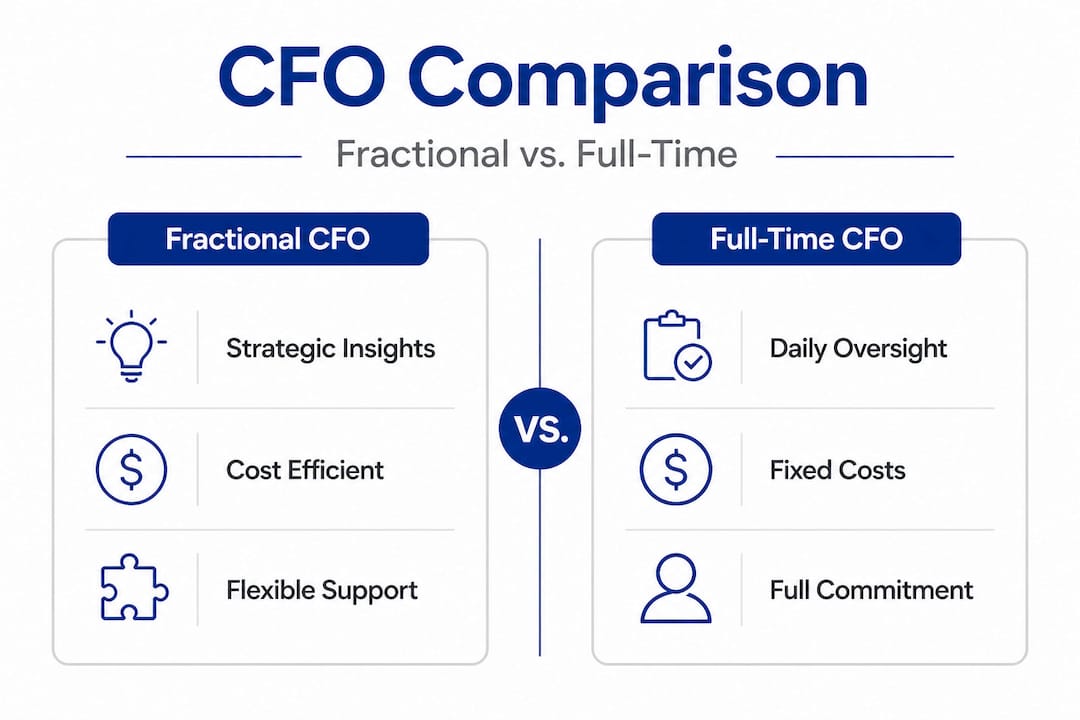
FunctionFractional CFOFull-time CFOController
Strategic planningYesYesNo
Financial modelingYesYesLimited
Cash flow managementYesYesPartial
Day-to-day accountingNoOverseesYes
Cost$3K to $10K/month$200K+ per year$80K to $130K/year
CommitmentFlexibleFull-timeFull-time
ScalabilityHighLowLow

The table tells a clear story. You’re getting executive-level strategic output at a fraction of the cost, and with far more flexibility than a traditional executive hire would allow.

Infographic comparing fractional and full-time CFO roles

Why choose a fractional CFO: Benefits for SMEs

Understanding the specific functions, let’s explore the real-world benefits fractional CFOs bring to SMEs. The case isn’t just about cost savings, though those are real and significant. It’s about accessing a level of financial intelligence that most small businesses have never had.

Business owner and CFO discuss financial reports

The most immediate benefit is cost efficiency. A full-time CFO at a company with $5 million in revenue might cost $180,000 to $250,000 per year in base salary alone, plus benefits, bonuses, and equity. A fractional CFO providing 20 hours per month might run $4,000 to $8,000 monthly. That’s $48,000 to $96,000 annually for strategic financial leadership that you can scale up during fundraising or planning cycles and pull back during quieter periods.

The second major benefit is speed of impact. When a skilled fractional CFO steps in, they typically identify financial inefficiencies, reporting gaps, or strategic blind spots within the first 30 to 60 days. These are problems your business may have been living with for years. One company we worked with discovered that a single underperforming service line was consuming 28% of operational costs while generating only 11% of revenue. That insight alone justified the engagement.

Other benefits that SME owners consistently report include:

  • Faster fundraising timelines because financial documentation and models are investor-ready from day one
  • Better banking relationships as lenders see disciplined forecasting and clear repayment capacity
  • Improved team accountability because financial goals are communicated clearly across departments
  • Reduced owner stress when financial blind spots are eliminated and decisions are grounded in real data

The outsourced CFO benefits extend well beyond the balance sheet. It’s worth reviewing the CFO signals to understand whether your business has already hit the inflection point where fractional support becomes a necessity rather than a nice-to-have.

ScenarioWithout fractional CFOWith fractional CFO
Fundraising preparation6 to 12 months, often disorganized4 to 8 weeks with investor-ready models
Cash flow visibilityReactive, monthly surprisesProactive, 13-week rolling forecast
Budget accuracy20 to 40% variance typical5 to 15% variance with dynamic models
Strategic decisionsGut-feel and incomplete dataData-driven with scenario analysis

Pro Tip: Don’t wait until you’re in a financial crisis to bring in fractional CFO support. The best time to engage is when your business is growing steadily and you want to protect and accelerate that momentum. Reactive engagements cost more and deliver less than proactive ones.

How to leverage a fractional CFO for business growth

Now that the advantages are clear, let’s focus on actionable ways to make fractional CFOs work for your business growth. The value you get depends heavily on how well you define the engagement upfront and how actively you participate in the process.

Follow these steps to get the most from a fractional CFO relationship:

  1. Identify your financial gaps first. Before you search for a CFO, audit your own situation. Are you struggling with cash flow visibility? Preparing for fundraising? Unsure which parts of the business are actually profitable? Knowing your core problem helps you find someone with exactly the right expertise.
  2. Search for sector-relevant experience. Use LinkedIn, professional networks, or platforms like John Galt Finance to find candidates who have worked in your industry. Ask for examples of specific outcomes they’ve delivered, not just titles they’ve held.
  3. Define the scope clearly. Agree on deliverables before day one. A fractional CFO engagement works best when both parties know what success looks like. Is it a three-year financial model? A fundraising-ready data room? A monthly dashboard for the leadership team? Write it down.
  4. Create structured reporting cadences. Set up weekly or biweekly check-ins during the early phase. Review financial reports together rather than just receiving them. The questions you ask and the decisions you make together are where the real value is generated.
  5. Integrate them into your leadership team. Fractional CFOs deliver the most value when they’re connected to strategy conversations, not siloed into a finance function. Include them in board calls, planning sessions, and significant operational decisions.
  6. Measure outcomes against milestones. Track what’s changing as a result of the engagement. Gross margin improvement, reduction in days sales outstanding, cash reserve increases, and time-to-close on fundraising are all concrete metrics you can monitor.

The structure of your outsourced finance team should complement the fractional CFO, with the CFO handling strategy and your accounting or bookkeeping team managing day-to-day operations. Pairing both functions creates the most complete financial operating system for a growing business. CFO-led analysis brings a level of decision-making rigor that most SMEs have never experienced before, and once you’ve had it, going without it feels genuinely risky.

A fresh perspective: What most business owners miss when considering fractional CFOs

Here’s the truth most articles won’t tell you: the business owners who benefit most from fractional CFO support are rarely the ones who hired when they were desperate. They’re the ones who brought in expertise while things were going reasonably well, before the cracks became chasms.

We’ve seen it repeatedly. A business grows from $1 million to $4 million on the founder’s intuition and hustle. Revenue is climbing, the team is expanding, and everything looks great from the outside. But under the surface, margins are thinning, cash flow is volatile, and financial decisions are still being made the same way they were made at $500,000 in revenue. That mismatch between operational complexity and financial sophistication is exactly where businesses stall or stumble.

The counterintuitive reality is that you don’t need a full-time CFO to get full strategic value. A skilled fractional CFO working 15 to 20 hours per month can deliver more meaningful financial leadership than a mediocre full-time hire working 40 hours a week. It’s not about time. It’s about the quality of thinking and the clarity of strategy that comes from genuine expertise applied at the right moments.

Many business owners also underestimate how much a fractional CFO changes the culture of financial decision-making across the entire organization. When leadership starts receiving clear, forward-looking financial data and making decisions from a position of knowledge rather than hope, that clarity filters down through every department. Marketing spends more deliberately. Operations makes smarter capacity decisions. Sales understands which deals are actually profitable.

Strategic oversight isn’t a cost. It’s a multiplier. The CFO services for growth that many SMEs are now accessing remotely are fundamentally democratizing financial leadership in ways that weren’t possible even a decade ago. The businesses that recognize this early and act on it will build sustainable competitive advantages over peers who keep treating financial strategy as something to figure out later.

Unlock strategic growth with outsourced CFO and finance support

If this article has shifted how you think about financial leadership in your business, the next step is figuring out exactly what kind of support will drive the most impact for your specific situation.

https://johngalt-finance.com

At John Galt Finance, we provide fractional CFO expertise, custom financial modeling, and ongoing strategic support designed specifically for businesses with $500K to $20 million in revenue. Our financial planning guide gives you a clear starting framework, while our ongoing CFO support service ensures your business has consistent, proactive financial leadership every month. For businesses that need custom analysis and projections, our financial modeling process delivers investor-grade models built around your actual business drivers. Explore what’s possible when financial clarity becomes a core part of how you grow.

Frequently asked questions

How is a fractional CFO different from an outsourced finance team?

A fractional CFO provides strategic leadership and high-level financial oversight, while an outsourced finance team typically handles operational functions like accounting, reporting, and transaction processing.

When should a business hire a fractional CFO?

Businesses should bring in fractional CFO expertise when facing rapid growth, complex fundraising needs, or strategic decisions that require more than basic financial reporting. Reviewing key growth signals can help you pinpoint the right timing.

What is the typical cost structure for fractional CFO services?

Most fractional CFOs work on hourly, project, or monthly retainer arrangements, making them far more affordable than a full-time hire. The cost advantages of outsourced CFOs are one of the clearest financial benefits SMEs report after engagement.

Can a fractional CFO help with fundraising or investor relations?

Yes, and this is one of the highest-value use cases. A fractional CFO can build financial models, prepare due diligence documentation, and support investor presentations. The full scope of what a fractional CFO does includes all aspects of capital strategy and fundraising readiness.

FAQ

How quickly can a fractional CFO drive results?

Diagnostic and quick wins in 30 days, foundational reporting (close, cash forecast, KPI dashboard) by 90 days, strategic initiatives (pricing, capital structure) showing measurable impact in 6 months. If nothing has changed by month 3, the engagement isn’t working.

What’s the highest-leverage thing a fractional CFO does?

Pricing strategy. A 1% price increase typically drops 5-10% to EBITDA in SMBs with operating leverage. Most owners under-price because they have no systematic gross margin analysis. See our profit margin analysis guide for the framework.

How is a fractional CFO different from a controller?

Controller owns historical accuracy (close, reconciliations, compliance). Fractional CFO owns forward-looking decisions (forecasting, capital allocation, strategy). You typically need both above $3M revenue; one person rarely excels at both.

How do I know if a fractional CFO is delivering value?

Three measurable outcomes by month 6: faster close (sub-10 days), accurate weekly cash forecast (+/- 10%), and at least one strategic decision moved by data (pricing change, customer cut, capex deferral). If none have happened, the engagement is underperforming.

Can I get fractional CFO support for under $3,000/month?

Below $3k/month, you’re typically getting an experienced controller or junior CFO. That’s fine for businesses under $1M revenue. Past $2M revenue, the strategic decisions get expensive; underspending on the CFO seat is usually false economy.

Share this:

The strategic CFO: driving business growth and efficiency

Strategic CFO Benchmarks

MetricBenchmark
Time CFO spends on strategy (best-in-class)40-50% (vs 15-20% historical)
Full-time CFO total compensation (US, $5M-$50M)$220,000-$450,000/year
Fractional CFO retainer$3,000-$10,000/month
ROI of strategic CFO (first 12 months)3-7x fees (CFO Selections survey)
Revenue threshold where strategic CFO pays back$1M+ ARR
EBITDA improvement after CFO engagement (avg)+2-4 percentage points within 18 months
Time from CFO hire to first board package30-60 days
Common strategic CFO deliverables3-year model, 13-week cash, KPI dashboard, capital plan

Most business owners think of their CFO as the person who closes the books, files reports, and tells everyone what they can’t afford. That picture is outdated by about a decade. Today, 57% of finance leaders are responsible for shaping enterprise strategy, carrying 20% more responsibilities than peers who stay in the traditional finance lane. The modern CFO sits at the center of every major decision your company makes, and understanding that shift could be the single most important reframe for your business growth in 2026.

Table of Contents

Key Takeaways

PointDetails
CFOs are strategic leadersToday’s CFOs shape business direction and drive more than financial operations.
Key planning methodologiesScenario planning, financial modeling, and KPI tracking empower CFOs to align resources with growth.
Growth and cost balanceCFOs must support expansion while ensuring cost discipline, even in volatile markets.
Agility is criticalForward-thinking CFOs embrace agile planning to adapt to market changes and uncertainty.
Strategic CFO mindsetThe most effective CFOs act as business architects, connecting data, insights, and execution.

How the CFO’s role has evolved in strategic planning

The old version of a CFO was essentially a sophisticated bookkeeper. They tracked what happened, produced accurate reports, and made sure the company stayed compliant. That was valuable, no question. But it was fundamentally backward-looking. Every insight arrived after the fact, and “strategy” meant setting next year’s budget based on last year’s numbers.

The modern CFO operates in a completely different dimension. They are active participants in deciding where the company goes, not just how much it costs to get there. According to research from ICAEW on CFO strategic roles, today’s CFOs wear eight distinct strategic hats: leader, analyst, creator, critical thinker, adjudicator, orchestrator, implementor, and communicator. Each of those roles requires skills that go well beyond reading a balance sheet.

For small and medium-sized enterprises, this evolution matters even more. You rarely have a dedicated strategy team, a VP of corporate development, or a deep bench of senior analysts. Your CFO fills all of those gaps. When the role is done right, it creates leverage across every function in the business.

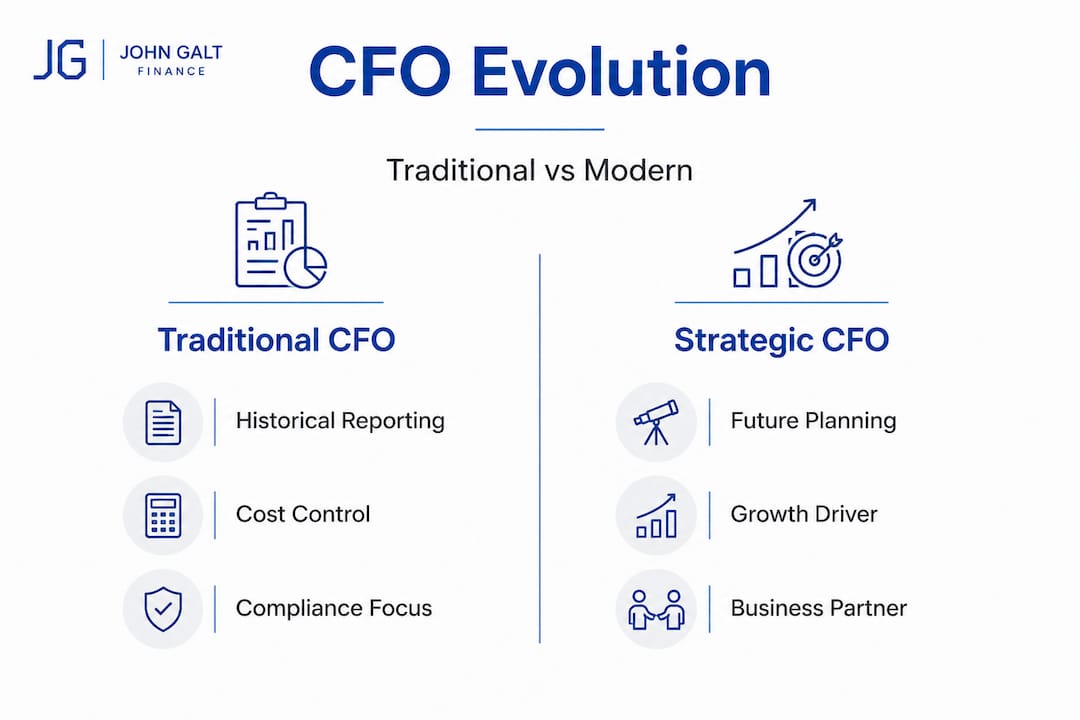
Here is a quick comparison that shows just how different the old and new models are:

DimensionTraditional CFOModern strategic CFO
Primary focusHistorical reportingForward-looking planning
Key deliverableFinancial statementsStrategic roadmaps
Business involvementFinance department onlyCross-functional leadership
Decision roleInformerActive decision-maker
Time horizonPast quarterNext 3 to 5 years
Risk postureRisk avoidanceCalculated risk optimization

Infographic comparing traditional and modern CFO roles

The gap between these two models is exactly why understanding the signs your business needs a CFO is so critical before you hire or outsource. You need the second model, not the first.

Strategic CFO activities typically include leading scenario analysis for major investments, partnering with operations leaders to improve unit economics, building financial models to test new market entry, communicating financial position to lenders and investors, and setting performance benchmarks across departments. These are not finance tasks. They are business tasks that happen to require deep financial fluency.

CFO leading scenario analysis meeting

Key methodologies CFOs use for impactful strategic planning

With the CFO’s core responsibilities defined, here is how these strategic leaders actually drive business results through specific, repeatable methodologies.

The tools a modern CFO brings to strategic planning are both analytical and organizational. They create structure in environments where business owners often operate on instinct. Key CFO methodologies include scenario planning, driver-based financial modeling, KPI development, capital allocation prioritization, rolling forecasts, and business case development with ROI tracking. Each tool solves a specific problem.

MethodologyPrimary purposeBest used when
Scenario planningModel multiple futuresFacing uncertainty or major decisions
Driver-based modelingLink operations to financialsScaling headcount, pricing, or products
KPI developmentMeasure what mattersBuilding accountability across teams
Capital allocationPrioritize investmentsMultiple competing growth initiatives
Rolling forecastsUpdate plans continuouslyMarkets or revenues shift frequently
ROI trackingEvaluate outcomesPost-investment performance reviews

Building a data-driven strategic planning process using these tools does not have to be overwhelming. Here is how leading CFOs approach it in a structured sequence:

  1. Define the business objectives at the highest level, tied to specific outcomes like revenue growth, margin improvement, or market expansion.
  2. Identify the key value drivers that most influence those outcomes, which might be customer acquisition cost, average contract value, or production throughput.
  3. Build a driver-based financial model that connects those operational levers directly to your income statement and cash position. You can explore the essential financial models most relevant to your stage of growth.
  4. Develop KPIs tied to each driver, giving your management team a clear scorecard. A well-structured approach to mastering financial KPIs makes accountability visible at every level.
  5. Run scenario analyses to stress-test the plan under optimistic, base, and conservative assumptions. A solid scenario planning guide gives you a framework for doing this systematically.
  6. Switch from annual budgets to rolling forecasts so that you update your plan continuously rather than defending outdated assumptions all year long.
  7. Track ROI on every major initiative with the same rigor you apply to the original business case.

Pro Tip: Rolling forecasts are the most underused tool in small business finance. Most owners stick with an annual budget because it feels more controlled. In reality, a static budget locks you into assumptions you made six or twelve months ago. A rolling 12-month forecast updates as new data arrives, giving you a far more accurate picture of where you are actually headed.

The practical reality for SMEs is that you do not need to implement all seven of these steps at once. Start with a driver-based model and one rolling forecast cycle. The insight that generates will reveal exactly which other tools to add next.

Balancing growth priorities and cost discipline under pressure

While methodology is key, the true art of CFO leadership is balancing sometimes conflicting business goals. Growth costs money. Cost discipline constrains spending. Holding both priorities at the same time without compromising either one is where great CFOs separate themselves from average ones.

The data on this is clear. Nearly two-thirds of CFOs rank growth as their top priority for driving shareholder value, while 60% simultaneously rank cost management as equally critical. This is not a contradiction. It reflects the sophisticated thinking that defines strategic finance. You pursue growth, but you pursue it efficiently.

Here is how leading CFOs achieve both at once:

  • Zero-based budgeting for discretionary spend: Rather than rolling forward last year’s costs with a small increase, they justify every discretionary line item from scratch each cycle.
  • Growth investment tiers: They classify spending into three buckets: core operations, growth bets, and exploratory experiments. Each tier has its own financial standards and performance expectations.
  • Unit economics monitoring: Before scaling any initiative, they verify that the economics at the unit level are sound. Growing a money-losing product faster just accelerates losses.
  • Variance analysis with accountability: When costs run over or revenue falls short, they trace the variance to a specific decision and use it as a coaching tool rather than just a reporting exercise.
  • Portfolio reallocation: They systematically move resources out of underperforming activities and into high-return ones, rather than protecting every budget line equally.

“The best CFOs do not treat growth and efficiency as opposing forces. They use financial discipline as the mechanism that makes growth sustainable, ensuring that every dollar invested in expansion has a clear path to return.” This perspective is what CFO services for growth brings to businesses that are scaling quickly but lack the financial infrastructure to scale responsibly.

Pro Tip: When a market disruption or internal emergency hits, many business owners respond by freezing all spending. That reflex can damage your competitive position. A better approach is the “protect, pause, pivot” framework. Protect your core revenue drivers, pause discretionary initiatives with unclear ROI, and pivot resources toward wherever the disruption creates opportunity. Your CFO should have this playbook ready before the crisis arrives, not during it.

The strategic finance best practices that consistently produce the best balance between growth and efficiency are built around discipline in the planning process itself, not just in the spending decisions.

Critical challenges for CFOs in strategic planning and how to overcome them

Understanding these tensions is crucial, but here are the chief obstacles and how forward-thinking CFOs solve them in practice.

Every CFO, regardless of company size, faces a version of the same core tension. The business needs immediate results. The market is unpredictable. The finance infrastructure is often not built for the strategic demands being placed on it. These are not excuses. They are real constraints that require specific solutions.

The most common obstacles CFOs report include balancing short-term performance pressure with long-term strategic initiatives, navigating market volatility that makes static budgets obsolete almost immediately, and working around infrastructure limitations such as manual processes, fragmented data systems, and outdated reporting tools that consume time that should go toward analysis.

Here is how high-performing CFOs address each challenge:

  • Short-term vs. long-term tension: They create a clear financial separation between quarterly performance tracking and multi-year strategic investment tracking. Short-term metrics live in the operating scorecard. Long-term metrics live in the strategic roadmap. Neither bleeds into the other.
  • Volatility and rigid budgets: They replace annual budget lock-ins with scenario-adjusted rolling forecasts that update monthly. This makes the plan a living document rather than a political artifact.
  • Manual processes and data gaps: They prioritize automating the highest-volume, lowest-value finance tasks first, which frees analytical capacity for strategic work. Even basic automation in accounts receivable or expense reporting can reclaim five to ten hours of CFO time per week.
  • Decision paralysis from too much data: They build a single-page executive dashboard tied directly to the key value drivers identified in the strategic model. Every decision gets tested against that dashboard.

“The CFO/Controller Financial Performance Index hit a record 149% in 2026, with strong expectations for revenue and profit growth. That optimism reflects what happens when businesses fix their finance infrastructure and give their CFO the tools to lead strategically.”

For SMEs, the infrastructure challenge is often the most acute because resources are limited. That is exactly why finance team outsourcing has become such a practical option. You get the strategic capacity without the full-time salary burden. And with access to industry financial analysis for CFOs, you can benchmark your performance against businesses with the same cost structures and revenue models, which makes planning far more precise.

Why the best CFOs are business strategists first and accountants second

Here is the uncomfortable truth most CFO hiring guides will not tell you: a highly technical accountant with deep compliance expertise can actually be the wrong hire for a growth-stage SME. Credentials and technical accuracy matter, but they are table stakes, not differentiators.

The CFOs who transform businesses are the ones who think like operators. They walk the production floor, ask sales leaders why deals fall through, and challenge marketing on what a lead actually costs to close. They do not just accept the numbers that land on their desk. They interrogate the assumptions behind those numbers.

The classic mistake at the SME level is hiring a finance leader who is brilliant at closing the month and terrible at challenging the CEO’s growth assumptions. That CFO produces beautiful reports about where the business has been. They offer almost no insight into where it should go.

What separates impactful CFOs is their willingness to operate at the intersection of financial strategy and operational reality. The most effective approach, which we see consistently in high-performing engagements, is CFO-led financial analysis that starts with the business question and works backward to the financial answer, not the other way around.

A practical test: ask your CFO what single operational change would have the biggest positive impact on your gross margin over the next 90 days. A finance manager will tell you about cost of goods. A strategic CFO will walk you through three specific levers, explain the tradeoffs of each, and recommend a sequenced action plan. That difference in response quality is the entire game.

How to unlock strategic CFO thinking in your own business

You do not have to wait until your company reaches a certain revenue threshold to access this level of financial leadership.

https://johngalt-finance.com

At John Galt Finance, we work with businesses between $500k and $20 million in revenue to build exactly the kind of strategic finance function described in this article. From a custom financial modeling process tailored to your specific drivers, to a structured financial scenario planning process that prepares you for multiple market futures, to a complete financial planning for business owners framework that ties your day-to-day decisions to long-term value creation. Our outsourced CFO model gives you senior-level strategic guidance without the overhead of a full-time hire, so your business gets the thinking it needs at a cost structure that makes sense right now.

Frequently asked questions

What is the CFO’s main contribution to strategic planning?

The CFO shapes business direction by connecting financial data to growth strategies, resource allocation, and risk management. Modern CFOs serve multiple roles including leader, analyst, creator, and orchestrator in the planning process.

Why are CFOs now so involved in overall business strategy?

57% of finance leaders now oversee enterprise strategy, reflecting their evolved role as business partners who drive growth, efficiency, and organizational adaptability rather than just financial compliance.

How do CFOs help balance growth and cost control?

Nearly two-thirds of CFOs prioritize both simultaneously, using tools like scenario planning, rolling forecasts, and unit economics monitoring to pursue growth without sacrificing financial discipline.

What challenges do CFOs face in strategic planning?

The top obstacles are balancing short-term pressures with long-term strategic value, managing volatility with agile planning processes, and overcoming infrastructure gaps that limit strategic thinking capacity.

FAQ

What makes a CFO “strategic” vs operational?

An operational CFO runs close, compliance, and controls. A strategic CFO does all that plus drives capital allocation, M&A, pricing strategy, and major capex decisions. The shift typically happens around $10M revenue, when operational tasks become a controller’s job and the CFO’s seat becomes about decisions that move EBITDA by 5%+.

Can a fractional CFO be strategic?

Yes, often more so than a full-time hire at that size. Fractional CFOs typically serve 3-8 clients and import patterns across industries. The risk is over-allocation; if a fractional CFO has more than 10 clients, depth suffers. Ask for client list size during diligence.

What’s the highest-leverage decision a CFO makes?

Capital allocation: where every incremental dollar of cash flow goes (debt paydown, growth investment, owner distributions, reserves). A poorly allocated $500k can cost an SMB 2-3 years of growth. Pricing is a close second; a 1% price increase often drops 5-10% to EBITDA.

How do I measure CFO impact?

Track three things: (1) EBITDA margin change vs baseline, (2) days to close month-end, (3) cash conversion cycle. A strategic CFO should improve all three within 12 months. If none have moved, you have a scope or person problem.

When should I promote my controller to CFO?

Rarely. Controllers are wired for accuracy and process; CFOs are wired for capital and strategy. Promoting a controller often leaves you with neither role done well. Better path: hire a fractional CFO above the controller, and grow the controller into VP Finance over 2-3 years.

Share this:

How to read financial statements and make smarter decisions

Financial Statement Reading Benchmarks

MetricBenchmark
Three core statements every SMB needsP&L, balance sheet, cash flow
Standard SMB reporting frequencyMonthly (close within 10 days)
Material variance threshold to investigate+/- 5% on revenue, +/- 3pp on margin
Current ratio (healthy SMB)1.5-3.0
Quick ratio (healthy SMB)>1.0
Gross margin target (B2B services)40-60%
EBITDA-to-cash conversion (healthy)>80%
SMBs that can’t read their own financials~60% (NSBA survey)

Most small business owners make major decisions based on gut feel rather than numbers, not because they’re careless, but because financial statements feel confusing, even intimidating. If you’ve ever stared at a balance sheet and wondered what it actually tells you about your business, you’re not alone. This guide cuts through the jargon and gives you a practical, step-by-step approach to reading, interpreting, and acting on your financial statements with real confidence. By the end, you’ll know exactly what to look for, what questions to ask, and how to turn raw numbers into smarter decisions.

Table of Contents

Key Takeaways

PointDetails
Monthly reviews matterReview your financial statements every month to stay proactive about your business health.
Use trends not snapshotsAnalyze trends across multiple periods for deeper insight—single numbers can be misleading.
Cash flow is keyPrioritize cash flow over net income when judging overall financial health.
Ratios reveal contextFinancial ratios put your results in perspective and help with meaningful comparison.

Essential financial statements and what they reveal

Financial statements are the scoreboard of your business. They tell you where you’ve been, where you stand today, and where you’re likely headed if current trends continue. There are three core documents every SMB owner needs to understand.

The balance sheet answers the question: what does the business own and owe right now? It shows your assets (cash, inventory, equipment, receivables), your liabilities (loans, accounts payable, credit lines), and your equity (what’s left over if you paid everything off). Think of it as a snapshot of your business’s net worth at a single moment in time.

Woman checking balance sheet details

The income statement (also called the profit and loss statement, or P&L) answers: did we make money this period? It shows your revenues, cost of goods sold, gross profit, operating expenses, and net income. This is the statement most owners look at first because it tells them whether the business was profitable.

The cash flow statement answers: where did the cash actually go? This is the one that often surprises people. A business can show a profit on the income statement and still run out of cash. The cash flow statement tracks money moving in and out across three categories: operating activities, investing activities, and financing activities.

Here’s a quick reference table to keep them straight:

StatementKey question answeredReview frequency
Balance sheetWhat do we own and owe?Monthly
Income statementDid we make a profit?Monthly
Cash flow statementWhere did the cash go?Monthly
Financial ratiosHow do we compare and trend?Quarterly

When it comes to analyzing financial position, none of these documents works well in isolation. They’re designed to be read together. A spike in net income means very little if cash flow is negative. A growing asset base could signal health or it could signal an expensive problem, depending on what’s funding it.

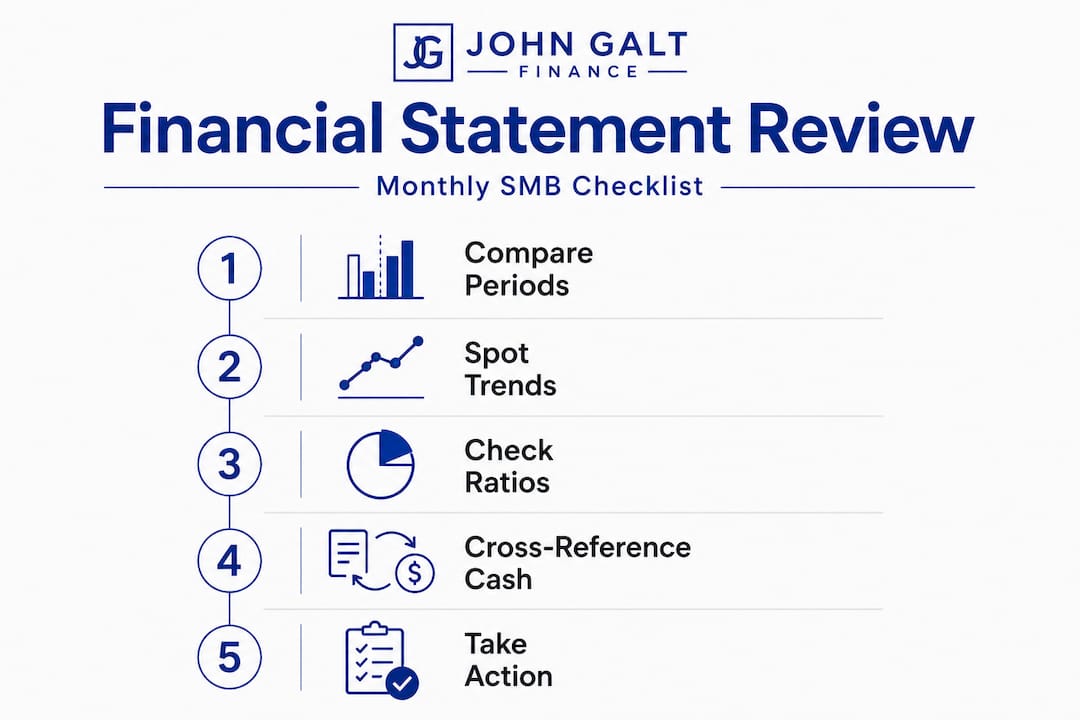
Key things to watch when reviewing all three statements each month:

  • Compare current results to the prior month and the same month last year
  • Check actual numbers against your budget or forecast
  • Look for unexplained changes in any line item, not just the totals
  • Track industry benchmarks when possible to understand where you stand against peers

According to best practices for SMB financial reviews, the recommended approach is to review statements monthly against prior periods and your budget, calculate ratios quarterly, and always look at trends across at least three periods before drawing conclusions.

Pro Tip: Always cross-reference the cash flow statement with the income statement. If net income is strong but operating cash flow is declining, that’s a major warning signal worth investigating immediately.

Step-by-step: How to read each financial statement

Now that you know what each statement is, here’s exactly how to read and interpret the details, step by step.

Reading the balance sheet:

  1. Start with total assets and confirm they’re growing over time. Growing assets generally indicate a growing business, but check what’s driving that growth.
  2. Review current assets (cash, receivables, inventory) separately from long-term assets (equipment, property). High receivables relative to cash can signal a collections problem.
  3. Look at current liabilities and compare them to current assets. If current liabilities exceed current assets, your short-term liquidity is under pressure.
  4. Check equity. If equity is shrinking despite profitability on the income statement, money is leaving the business somewhere, whether through draws, debt repayment, or losses not fully captured.

Reading the income statement:

  1. Start at the top: total revenue. Is it growing, flat, or declining compared to prior periods?
  2. Move to gross profit. Gross profit equals revenue minus cost of goods sold. A shrinking gross margin often means rising input costs or pricing pressure.
  3. Review operating expenses line by line. Look for categories that are growing faster than revenue.
  4. End with net income. This is the bottom line, but it’s not the whole story.

Reading the cash flow statement:

  1. Focus first on operating cash flow. This shows how much cash your core business activities generate or consume.
  2. Check investing activities for major purchases or disposals of assets.
  3. Review financing activities to see if the business is borrowing more or repaying debt.

The monthly financial health checks you build into your routine should always include comparing each statement to prior periods and to your budget vs. forecast. The budget tells you what you planned. The forecast tells you what you now expect. The actual statements tell you what really happened.

Infographic showing financial review checklist steps

Here’s a comparison of common approaches to financial statement review:

ApproachWhat it showsLimitation
Single-period reviewCurrent performanceNo context or trend
Month-over-monthShort-term changesSeasonal effects can mislead
Year-over-yearSeasonal-adjusted growthMisses recent shifts
Budget vs. actualPerformance vs. planOnly as good as your budget
3+ period trendTrue directional movementRequires consistent data

“Trends over 3+ periods reveal more than single-month snapshots.” This is true for every line item on every statement. A single bad month is noise. Three consecutive bad months is a signal you need to act on.

Industry best practices for monthly reviews confirm that the most valuable analysis comes from comparing across multiple periods, matching results to your budget, and benchmarking against peers in your industry. One month rarely tells the full story.

Key financial ratios and what they really mean

Simply reading the numbers isn’t enough. You need to know what they mean in context. That’s where financial ratios come in.

Ratios take two numbers from your financial statements and combine them to give you a meaningful relationship. Instead of just knowing you have $50,000 in current assets, a ratio tells you whether that’s enough to cover your short-term obligations. Context transforms raw data into insight.

Here are the three categories of ratios every SMB owner should track:

Profitability ratios measure how efficiently your business generates profit:

  • Gross margin = Gross profit divided by revenue. Shows what percentage of revenue remains after production costs.
  • Net profit margin = Net income divided by revenue. Shows overall profitability after all expenses.
  • Return on equity = Net income divided by total equity. Measures how well the business generates returns for its owners.

Liquidity ratios measure your ability to meet short-term obligations:

  • Current ratio = Current assets divided by current liabilities. A ratio above 1.0 means you have more short-term assets than debts due soon.
  • Quick ratio = (Current assets minus inventory) divided by current liabilities. A stricter measure that excludes inventory since it can take time to convert to cash.

Leverage ratios measure how much debt you carry relative to equity:

  • Debt to equity = Total liabilities divided by total equity. Higher ratios signal greater financial risk.
  • Interest coverage ratio = Operating income divided by interest expense. Shows whether you’re earning enough to comfortably cover your debt payments.

When tracking essential SMB financial metrics over time, patterns matter far more than any single data point. A current ratio of 1.5 might look fine, but if it was 2.2 six months ago, that declining trend is something to take seriously before it becomes a crisis.

As financial analysis research makes clear, raw numbers are insufficient on their own because ratios provide context, but even ratios are most powerful when tracked as trends rather than isolated snapshots. A single ratio in isolation tells you very little. That same ratio measured over eight quarters tells a story.

The kind of insight that CFO financial analysis brings to an SMB is exactly this: pattern recognition across periods, benchmarks, and ratios working together to give leadership a complete and honest picture.

Pro Tip: Prioritize operating cash flow over net income as your primary health indicator. A business with strong net income and declining operating cash flow is showing early warning signs that deserve immediate investigation.

Common mistakes and red flags to watch for

Even with a framework in place, many business owners fall into predictable traps. Here’s how to spot and avoid them for sharper analysis.

“Ratios contextualize, but trends reveal the real story behind your numbers.” This distinction matters because a single ratio can mislead, while a deteriorating trend across periods will always tell the truth.

The most common mistakes SMB owners make when reviewing financial statements, and how to fix them:

  1. Focusing only on net income. Net income can be manipulated by accounting choices like depreciation timing or accrual entries. Operating cash flow is much harder to dress up and is a far more reliable indicator of financial health, as financial red flag research consistently shows.
  2. Reviewing only a single period. Looking at just one month or one quarter strips your numbers of all context. Always compare at least three periods side by side before reaching any conclusion.
  3. Skipping the budget comparison. Your actual results only become meaningful when measured against what you planned. A $10,000 profit looks very different if you budgeted $25,000.
  4. Ignoring industry benchmarks. Your gross margin might feel acceptable until you realize competitors average 10 points higher. Benchmarking is how you find operational gaps you didn’t know existed.
  5. Missing line-item changes inside the totals. Totals can look stable while individual line items shift dramatically. A flat operating expense total could be hiding a sharp rise in one category offset by accidental cuts in another.

Setting up a daily financial dashboard can help you catch line-item changes before they compound into bigger problems. When you track key SMB financial metrics consistently, anomalies become visible much earlier, giving you time to act rather than react.

Red flags to watch for specifically:

  • Accounts receivable growing faster than revenue (customers are paying more slowly)
  • Inventory rising without a corresponding revenue increase (potential overstock or obsolescence)
  • Operating cash flow consistently lower than net income over multiple periods
  • Gross margin declining without a clear explanation tied to strategy
  • Short-term debt rising to fund operations rather than growth

The truth about financial statements: What most SMB owners miss

Here’s the uncomfortable reality: most small business owners treat the income statement like it’s the whole story. Profit is what matters, right? Not quite. This is where conventional thinking actually works against you.

A business can be profitable and insolvent at the same time. We’ve seen it repeatedly. Revenue is up, net income looks great, and then the business can’t make payroll because cash is sitting in unpaid invoices. The income statement said you were winning. The bank account said otherwise. This is why mastering cash flow forecasting is not optional for a serious SMB owner. It’s foundational.

The real shift happens when you stop treating financial statements as a historical report and start using them as a forward-looking tool. When you track trends across quarters, compare operating cash flow to net income regularly, and benchmark against your industry, you stop being surprised by your numbers. You start seeing problems three months before they hit and opportunities you would have otherwise missed.

Most businesses that struggle with cash flow aren’t failing at sales. They’re failing at financial literacy. The good news is that this is entirely fixable once you change what you measure and how often you look at it. Financial red flags rarely appear overnight. They build slowly, and they’re visible in the trend data long before they become crises.

The owners who make the best decisions aren’t necessarily the ones with the most revenue or the best products. They’re the ones who understand what their numbers are actually saying, and who build the habit of listening to them every single month.

Take your financial confidence to the next level

Understanding your financial statements is the foundation, but applying that understanding consistently is where the real results come from. Most SMB owners have the intelligence to interpret their numbers. What they lack is the system, the structure, and the expert perspective to do it reliably month after month.

https://johngalt-finance.com

At John Galt Finance, we help businesses like yours build that structure. Whether you’re looking to sharpen your practical financial planning, conduct a real in-depth profit margin analysis, or simply want a clear-eyed assessment of where your business stands right now, we bring CFO-level insight without the overhead of a full-time hire. Start with a financial health check and get a concrete picture of what your numbers are really telling you.

Frequently asked questions

What is the most important financial statement for a small business?

The cash flow statement is often the most critical because it shows how much cash is actually available to run and grow your business, since a profitable business can still fail if operating cash flow is negative.

How often should I review my financial statements?

You should review your main financial statements at least monthly, and best practice guidance recommends calculating ratios quarterly and tracking trends across at least three periods.

What are common red flags in financial statements?

Watch for declining operating cash flow relative to net income, rising accounts receivable, and unexplained changes in gross margin compared to previous periods.

Why are ratios important for financial statement analysis?

Ratios put your numbers into context and help you measure performance, spot issues, and compare with peers, because monthly ratio tracking across multiple periods reveals trends that raw numbers alone will never show.

FAQ

What’s the order I should read my financial statements?

Cash flow first (do we have money?), then P&L (are we profitable?), then balance sheet (what do we own and owe?). Most owners read the P&L first, miss the cash story, and get blindsided by liquidity issues.

What’s the difference between EBITDA and cash flow?

EBITDA strips out interest, taxes, depreciation, and amortization to approximate operating cash. Real cash flow further adjusts for working capital changes, capex, and debt service. A growing business often shows strong EBITDA while burning cash. See our EBITDA explained guide for the full bridge.

How do I spot red flags in my own financials?

Five quick checks: (1) AR growing faster than revenue, (2) gross margin declining 2+ months in a row, (3) cash balance flat while revenue grows, (4) debt rising without matching asset growth, (5) opex growing faster than revenue. Any one of these warrants deeper analysis.

What’s a healthy balance sheet for an SMB?

Current ratio 1.5-3.0, quick ratio above 1.0, debt-to-equity under 2.0, AR days under 45 (B2B), and inventory turns appropriate for industry (8-12x for distributors). A clean balance sheet is your safety net during downturns.

How often should I review my statements with my accountant?

Monthly for SMBs over $500k revenue. Quarterly is the minimum to catch issues before they compound. If your accountant only prepares year-end statements, you’re flying blind 11 months a year.

Share this:

Strategic financial planning: Your SMB guide to smarter growth

Strategic Financial Planning Benchmarks

MetricBenchmark
SMBs with a 3-year strategic plan~35% (SCORE survey)
Planning horizon for SMBs ($1M-$10M)3 years (with annual refresh)
Recommended cash runway3-6 months of operating expenses
Debt-to-equity ratio target (healthy SMB)<2.0
Capex as % of revenue (asset-light SMB)2-5%
R&D as % of revenue (SaaS)15-25% (OpenView SaaS Benchmarks)
Time spent on strategic planning (CEO)10-15% of working hours
Companies with documented plan vs without (growth gap)30% higher revenue growth (Harvard study)

Most business owners think financial planning means reviewing last quarter’s numbers, checking the bank balance, and putting together a budget for next year. That view is understandable, but it’s costing you real opportunities. Strategic financial planning is something fundamentally different. It’s about looking ahead, connecting your biggest business ambitions to concrete financial targets, and making decisions today based on where you want to be in three to five years. This guide explains exactly what it is, breaks down the core tools you need, and shows you how to put it into practice without a full-time CFO on your payroll.

Table of Contents

Key Takeaways

PointDetails
Future-focused planningStrategic financial planning guides decisions with forward-looking goals and forecasts, not just past results.
SMB toolkit essentialsSetting SMART goals, multi-period plans, and rolling cash-flow forecasts form the backbone of effective SMB financial strategies.
Repeatable rhythms matterRegular reviews and planning intervals keep your business agile and prepared for cash-flow challenges.
Harness scenarios and riskIncorporating scenario and risk thinking lets you anticipate uncertainty and make stronger choices.
Accessible without full-time CFOModern tools and part-time support now let SMBs run strategic financial planning without needing a full-time CFO.

What is strategic financial planning?

Now that you know why routine financial analysis isn’t enough, let’s define what makes strategic financial planning distinct and valuable for your business.

At its core, strategic financial planning is “the process of translating a business’s long-term direction into financial goals, budgets, forecasts, cash-flow plans, and risk considerations so decisions can be made using forward-looking financial information.” That definition packs a lot in, so let’s unpack it.

The word “translating” matters. Your vision of doubling revenue in four years, opening a second location, or expanding into a new market doesn’t mean anything financially until you map it to numbers. Strategic financial planning creates that map. It answers questions like: How much cash will we need to hit that target? What will our margins look like at different growth rates? What happens to the plan if a key client walks?

Basic accounting and bookkeeping record what happened. Strategic financial planning determines what should happen and builds a financial framework to get you there. Think of accounting as a rearview mirror and strategic financial planning as your GPS navigation system.

“Most SMBs spend more time looking at last month’s numbers than planning for next year’s growth. The businesses that scale consistently are the ones that flip that ratio.”

Here’s what separates strategic financial planning from standard budget tracking:

  • It’s forward-looking. Forecasts, projections, and multi-year models replace historical-only reports.
  • It’s goal-driven. Every financial decision connects back to a specific, measurable business objective.
  • It’s dynamic. Plans get updated as conditions change, not just once a year.
  • It connects operations to finance. Hiring plans, marketing spend, and product investments all tie into financial targets.

For SMBs specifically, exploring strategic finance best practices can help you see how these concepts apply at your scale, without the complexity that large enterprises deal with.

Key components: The strategic financial planning toolkit

With the foundation in place, it’s time to break down what strategic financial planning looks like in action, step by step.

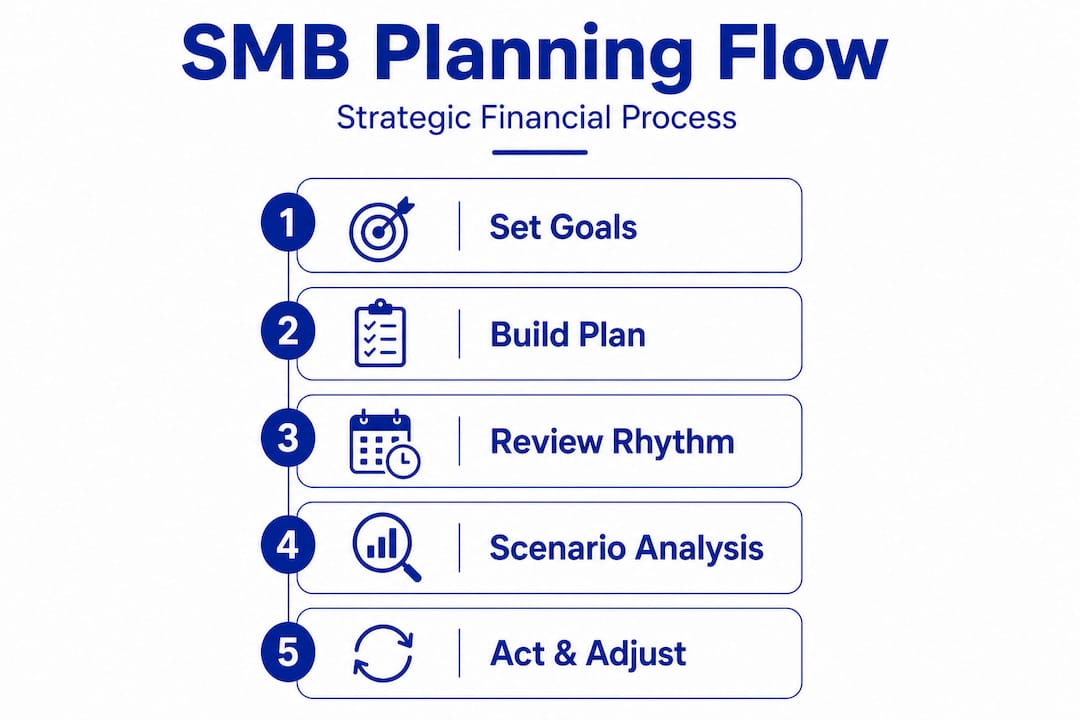
Core mechanics include setting SMART financial goals, building multi-period plans covering three to five years, managing cash flow and liquidity projections, using financial statements as the foundation, and incorporating scenario and risk thinking into every planning cycle.

CFO reviewing multi-year financial plan at table

Here’s a comparison of traditional budgeting versus strategic financial planning at the component level:

ComponentTraditional budgetingStrategic financial planning
Time horizon12 months3 to 5 years, with annual layers
FocusCost control and varianceGrowth, direction, and risk
Update frequencyAnnuallyRolling updates (monthly/quarterly)
Cash flow viewMonthly totalsTiming, runway, and liquidity
Decision supportReactiveProactive and forward-looking
Risk analysisMinimalBuilt into every scenario

Let’s walk through each core component in plain terms:

  1. SMART financial goals. Vague targets like “grow revenue” don’t work. A SMART goal sounds like “increase gross margin from 38% to 45% by Q4 2027 by reducing supplier costs and adjusting pricing on the top three product lines.” Every goal needs a number, a date, and an owner.
  2. Multi-period planning. Annual budgets are necessary but not sufficient. A three to five year plan gives you the runway to make big decisions, like taking on debt, raising capital, or investing in new equipment, with confidence. You’re not guessing; you’re planning with structure.
  3. Forecasting and budgeting together. Forecasting projects what you expect to happen based on current trends and assumptions. Budgeting sets what you want to happen based on targets. Running both together lets you spot the gap between aspiration and reality early enough to do something about it. Reviewing essential financial models will show you which model types apply to your specific situation.
  4. Cash flow and liquidity planning. Profitability on paper doesn’t pay your suppliers or your team. You need to know when cash comes in and when it goes out, not just whether you made money this quarter.
  5. Scenario and risk planning. What happens if your biggest client reduces orders by 30%? What if raw material costs spike 20%? Building these what-if scenarios into your regular review cycle means you have a plan before the crisis hits.

Pro Tip: Don’t build your financial plan in isolation. Your sales team knows what the pipeline really looks like, and your operations lead knows where the real cost pressures are. Pull those people into the planning process and you’ll get a far more accurate and useful model. Learn more through these financial management steps that connect planning to execution.

Why SMBs need repeatable financial planning rhythms

Understanding the toolkit is only part of the solution. What really counts is how consistently you use these tools. Here’s why rhythm is everything.

For SMBs, strategic financial planning works best when it’s built around repeatable planning intervals and a sharp focus on cash flow, specifically the timing difference between profit and actual cash availability, liquidity, and how long the business can operate before needing external funds.

Here’s a practical planning rhythm that works for most SMBs with revenues between $500k and $20 million:

Planning intervalWhat to reviewWho should be involved
WeeklyCash position, receivables aging, payables dueOwner, bookkeeper
MonthlyP&L vs. budget, cash flow forecast, key metricsOwner, finance lead
QuarterlyRolling forecast update, scenario review, goal check-inLeadership team
AnnuallyFull strategic plan refresh, 3 to 5 year model updateOwner, advisors, CFO/fractional CFO

This layered approach gives you real-time visibility at the operational level while also keeping the long-term direction in focus. It prevents the common trap of only looking at finances when there’s already a problem.

Infographic of strategic financial planning steps

One of the most overlooked concepts for SMB owners is cash runway: how many months your business can operate at current burn rate before running out of cash. This number should be reviewed monthly, especially during growth phases when you’re spending ahead of revenue. Managing cash flow challenges proactively is far less painful than scrambling for a line of credit in a crisis.

Here’s a sobering reality: many businesses that show strong profits on their income statement run into serious cash problems because they aren’t tracking the timing of when cash actually arrives. A client pays net 60. You pay your suppliers net 15. That gap can quietly destroy an otherwise healthy business.

Key monitoring habits that separate financially resilient SMBs from fragile ones:

  • Track essential financial metrics every month, not just at tax time.
  • Build a rolling 13-week cash flow forecast that you update weekly.
  • Know your breakeven point and review it any time your cost structure changes.
  • Set a cash reserve target and treat it like a non-negotiable minimum.

Statistic callout: SMBs that use rolling forecasts updated at least monthly are significantly better positioned to catch problems early, adjust spending before cash gets tight, and approach lenders or investors from a position of strength rather than desperation.

Scenario planning and risk: Making uncertainty manageable

With forecasts and rhythms set, the next step is controlling the unknown, and that’s where scenario planning and risk management come in.

The finance function’s strategic role now includes forecasting, scenario thinking, and decision support. The good news is that SMBs can replicate these outputs with the right tools or fractional support, without needing a full-time finance team.

Scenario planning sounds technical, but the concept is simple. You build your base case financial model, then you stress test it against a range of realistic situations. Most SMBs should run at least three scenarios:

  • Base case: Your most likely outcome given current trends and a reasonable set of assumptions.
  • Downside case: What happens if revenue drops 20 to 30%? Which costs can you cut and how quickly?
  • Upside case: What does your cash need look like if growth accelerates faster than expected? Can you actually fund it?

This exercise consistently surfaces hidden risks and opportunities that never appear in a standard budget. For example, many SMB owners discover in the upside scenario that rapid growth actually creates a cash crunch because they have to hire and invest ahead of the revenue that growth eventually generates.

Pro Tip: Build your scenarios using ranges, not single-point estimates. If your best estimate for revenue growth is 15%, model 10% and 20% as well. That range tells you far more about the risk in your plan than any single number. Use this scenario planning guide to structure this process from scratch.

Common risks SMBs should include in their scenario analysis:

  • Key customer concentration (one client representing more than 20% of revenue)
  • Supplier price increases and availability disruptions
  • Interest rate changes affecting debt costs
  • Regulatory or compliance changes in your industry
  • Talent shortages driving up labor costs unexpectedly

None of these are exotic risks. They’re the situations that blindside businesses every year simply because they hadn’t modeled what would happen if things went sideways. Pairing scenario planning with a clear financial risk mitigation strategy means you’re not just identifying risks, you’re building a response before you need one.

Applying strategic financial planning: Real SMB outcomes

Theory is great, but SMBs need to see that these steps work in real life. Here’s how data and owner experiences bring the process to life.

Data on SMB financial health shows that businesses demonstrating consistent revenue growth and stronger earnings performance are typically the ones applying structured financial planning. They’re not operating on gut feel. They track, they forecast, and they adjust.

“The businesses that accessed growth capital, improved their margins, and scaled sustainably weren’t necessarily the ones with the best products. They were the ones with the clearest financial picture of where they were going.”

Here’s a practical, step-by-step approach that SMB owners can start applying today:

  1. Define your three to five year ambitions. Write down your revenue target, profitability target, and any major investments or milestones (new location, new product line, acquisition). Make each one specific and time-bound.
  2. Build or update a financial model. Even a well-structured spreadsheet that projects revenue, costs, and cash flow monthly for the next 24 months is a significant step forward. Use your actual historical data as the starting point.
  3. Set a regular review cadence. Block calendar time for monthly financial reviews. Treat them as non-negotiable. Review actuals against forecast, update your assumptions, and flag anything that’s drifting off track.
  4. Use simple templates or accessible software. You don’t need enterprise-grade tools to do this well. The discipline of doing it regularly matters far more than the sophistication of the tool.
  5. Don’t fear outside support. A fractional CFO or outsourced financial advisor can set up your planning framework, train your team, and provide ongoing review for a fraction of a full-time salary. For most SMBs with revenues under $10 million, this is the highest-leverage financial investment available.

Why strategic planning is more accessible than you think

Here’s a candid perspective based on working with SMBs across a wide range of industries and revenue levels: the biggest barrier to strategic financial planning is not complexity. It’s the belief that it’s only for larger companies with dedicated finance teams.

That belief is simply wrong, and it’s expensive to hold onto.

The tools available today mean that a business with $2 million in revenue can run the same quality of financial modeling and scenario analysis that a $50 million company runs. The difference is access to expertise, not access to technology. Modern cloud-based financial tools have made the technical side remarkably approachable. What’s actually hard is the discipline to use them consistently.

The second mistake we see repeatedly is waiting until there’s a financial problem before taking planning seriously. By then, your options are narrow and your leverage is low. The best time to build a strategic financial plan is when business feels stable enough that it doesn’t feel urgent. That stability gives you the space to think clearly and the time to build something solid.

Our strongest recommendation: start imperfect and iterate. A rough three-year model reviewed every month is worth infinitely more than a perfect model built once and forgotten. Businesses that adopt this “done beats perfect” approach consistently out-perform those who wait until they have all the information before acting. If you’re considering whether ongoing CFO support makes sense for your business, the answer for most growing SMBs is yes, even on a part-time or fractional basis.

Put strategic financial planning into action for your business

If you’re ready to move from understanding to action, here’s where to start.

Reading about strategic financial planning is the first step. Putting it into practice is where the real value shows up. Whether you’re starting from scratch or trying to bring more structure to a planning process that’s already partially in place, having the right resources and support dramatically shortens the learning curve.

https://johngalt-finance.com

At John Galt Finance, we specialize in helping SMBs with revenues between $500k and $20 million build the financial planning infrastructure that drives real growth. Start by exploring our financial planning guide for a structured overview of the full planning process. From there, our cash flow forecasting resources give you the practical tools to manage liquidity with confidence. For businesses ready to build a tailored financial model, our custom financial modeling process is built specifically for SMB growth. The next step is yours to take.

Frequently asked questions

How does strategic financial planning differ from regular budgeting?

Strategic financial planning sets long-term direction and uses forecasts for forward-looking decisions, while budgeting focuses only on tracking income and expenses for a specific period. Budgeting is one tool within strategic planning, not a replacement for it.

How often should SMBs update their strategic financial plans?

Most SMBs benefit from updating their financial plans at least quarterly, with rolling forecasts reviewed monthly or even weekly during times of uncertainty or rapid change.

Can I do strategic financial planning myself, or do I need a CFO?

With the right tools or fractional support, SMBs can achieve CFO-level planning results because fractional support replicates the outputs of a full-time finance function at a fraction of the cost.

What financial data should SMBs review most regularly?

Prioritize cash flow forecasts, profit and loss statements, balance sheets, and short-term liquidity projections, as financial statements form the foundation of any effective planning process.

What is the typical planning horizon for SMBs?

A three to five year plan horizon gives SMBs the structure to pursue ambitious growth targets while maintaining enough detail to make practical, near-term decisions.

FAQ

What’s the difference between strategic planning and budgeting?

Strategic planning sets the 3-5 year direction (markets, products, capital structure). Budgeting allocates the next 12 months of dollars to execute it. Without strategy, your budget is just a spending plan. Without a budget, your strategy is just a wish list.

How long should a strategic financial plan take to build?

For an SMB, 6-10 weeks: 2 weeks of diagnostic, 2 weeks of scenario building, 2 weeks of stakeholder review, 2 weeks of finalization. Compressing it further usually produces a plan nobody executes.

What financial scenarios should I model?

At minimum, model base case, downside (-20% revenue), and upside (+20% revenue). Layer in stress tests for your biggest customer leaving and a 90-day AR slowdown. See our 13-week cash forecasting guide for the short-horizon view that complements strategic plans.

How do I know if my strategic plan is working?

Define 5-7 leading indicators (pipeline, headcount ramp, gross margin trend) and review them monthly against plan. Don’t wait for annual results to know whether you’re on track; by then it’s too late to course-correct.

Should I share my strategic plan with employees?

Share the direction and the top 3-5 priorities widely. Share detailed financial targets selectively (leadership team plus department heads). Transparency drives alignment but exposes the plan to competitive risk if it leaks; balance both.

Share this:

Build a CFO support workflow that drives SMB growth

CFO Support Workflow Benchmarks

MetricBenchmark
Hours per week for embedded CFO support (SMB)10-20 hours
Cadence of CEO-CFO syncWeekly (60-90 min)
Cadence of board financial reviewMonthly or quarterly
Cadence of 13-week cash forecast updateWeekly
Number of finance team members for $5M-$20M SMB2-4 FTE (bookkeeper, controller, fractional CFO)
Average CFO retainer for SMB$3,000-$10,000/month
Onboarding time for a new fractional CFO30-60 days
Documents needed for CFO onboarding3 years financials, current AR/AP aging, debt schedule, cap table, key contracts

Running a business between $500K and $20M in revenue without a strategic financial partner is like navigating without a map. You’re making decisions daily, but without the right financial infrastructure, those decisions often cost you more than you realize. The good news is that ROI typically runs 2 to 10x through improved cash flow, margin gains, and fundraising success when SMBs implement a structured outsourced CFO workflow. This guide walks you through exactly how to build one, step by step.

Table of Contents

Key Takeaways

PointDetails
Structured support saves costsOutsourced CFO workflows offer strategic finance expertise for a fraction of a full-time CFO’s cost.
Defined processes drive resultsSetting up roles, KPIs, and regular reviews helps SMBs outperform DIY and ad hoc approaches.
Proper workflow maximizes ROIBusinesses see improved cash flow, revenue, and margins with a disciplined CFO support process.
Accountability prevents failureRegular oversight and aligned expectations are crucial to avoid common outsourcing pitfalls.
Measure outcomes against benchmarksTracking EBITDA, revenue growth, and fundraising success clarifies your CFO workflow’s impact.

Why SMBs need a CFO support workflow

Most small and mid-sized businesses fall into one of two traps. Either the owner handles all financial decisions personally, juggling spreadsheets between client calls, or they hire a bookkeeper and assume that’s enough. Neither approach gives you the strategic visibility you need to grow with confidence.

The cost of staying in those traps is real. Without structured financial oversight, businesses routinely miss margin erosion, underprice services, misread cash cycles, and enter fundraising conversations completely unprepared. These are not small problems. They compound quietly until a cash crunch or a bad quarter makes them impossible to ignore.

Here’s what DIY financial management actually costs you compared to outsourced CFO support:

ApproachTypical annual costStrategic outputFundraising readiness
Owner-managed finances$0 direct, high time costReactive onlyLow
Bookkeeper only$20K to $60K/yearTransactional onlyVery low
Full-time CFO$250K to $500K/yearHighHigh
Outsourced/fractional CFO$12K to $180K/yearHighHigh

The math is straightforward. Outsourced CFOs are ideal for SMBs generating $1M to $50M in revenue who need strategic finance without full-time overhead. You get the same caliber of thinking at 60 to 80% less cost, which is why demand for these services is surging globally.

Common financial headaches that structured CFO support solves:

  • Unpredictable cash flow that forces short-term decision making
  • No clear picture of which products, services, or clients are actually profitable
  • Inability to build financial models for planning or fundraising
  • Reporting that’s always backward-looking, never forward-looking
  • No one accountable for tracking KPIs or financial milestones

If any of those sound familiar, you don’t have a bookkeeping problem. You have a strategy problem. Understanding the difference between a bookkeeper vs CFO function is the first step toward knowing what kind of support your business actually needs.

“Businesses that treat financial management as a back-office function instead of a strategic discipline are the ones that plateau early.”

Our fractional CFO guide breaks down exactly where these roles diverge and why it matters at your stage of growth.

Key components of an effective CFO support workflow

Understanding the “why” is only valuable if you act on it. A CFO support workflow isn’t just hiring someone and hoping for the best. It’s a structured system with defined roles, tools, and review cycles.

Who needs to be involved:

  • Business owner or CEO: Sets strategic priorities, approves major decisions, and participates in monthly financial reviews
  • Bookkeeper or controller: Maintains clean, up-to-date books that the CFO can actually work with
  • Fractional or outsourced CFO: Interprets the numbers, builds models, monitors KPIs, and advises on decisions

This sounds simple, but the research is clear. Success depends on clean books, receptive leadership, and clearly defined KPIs. If any one of those three is missing, the workflow breaks down fast.

Essential financial tools your workflow should include:

  • Accounting software (QuickBooks, Xero, or similar) with current, reconciled books
  • A cash flow forecasting model updated at minimum monthly
  • A KPI dashboard tracking gross margin, burn rate, customer acquisition cost, and revenue per employee
  • A financial model for scenario planning and decision support
  • A board-ready reporting package for stakeholder communication

Here’s how a systematic CFO workflow compares to the ad hoc approach most SMBs default to:

FactorAd hoc approachSystematic CFO workflow
Financial reviewsWhen problems ariseMonthly, scheduled in advance
KPI trackingInformal or occasionalDocumented, reviewed regularly
Cash flow forecastingNone or reactiveRolling 13-week forecast
Strategic planningAnnual at bestQuarterly with monthly check-ins
Fundraising preparationLast-minute scrambleOngoing investor readiness

Understanding the full scope of what a fractional CFO does day to day will help you set the right expectations before you engage one. The role goes well beyond reviewing monthly statements.

Pro Tip: Build your CFO workflow around scheduled, recurring financial reviews rather than crisis response. If your CFO only hears from you when something is wrong, you’re already behind. Proactive reviews give you time to course-correct before small problems become expensive ones.

Ongoing CFO support works best when it’s structured around a predictable cadence, not reactive firefighting.

Step-by-step: Building your CFO support workflow

With the components clear, here’s how to actually build the workflow from scratch. This process works whether you’re starting fresh or formalizing something that’s been informal for years.

Step 1: Clean up your financial foundation. Before your CFO can add value, your books need to be accurate and current. Reconcile all accounts, categorize transactions consistently, and ensure your chart of accounts reflects how your business actually operates.

Business owner organizing finances at home

Step 2: Define your KPIs. Work with your CFO to identify the five to eight metrics that matter most for your business model. Gross margin, monthly recurring revenue, accounts receivable days, and EBITDA (earnings before interest, taxes, depreciation, and amortization) are common starting points. Document what “good” looks like for each one.

Step 3: Choose and onboard your CFO partner. Select someone with experience in your industry or revenue stage. Clarify scope in writing: What will they own? What decisions require your sign-off? What’s outside their scope? Ambiguity here is where most engagements fail.

Step 4: Establish your financial review cadence. Set a monthly financial review meeting as a non-negotiable. Add a quarterly strategic planning session and a weekly or biweekly check-in for active projects. Put these on the calendar before the engagement begins.

Infographic with CFO workflow step-by-step flow

Step 5: Implement CFO-led financial analysis. This is where the real value shows up. Your CFO should be analyzing variances from budget, flagging margin compression, modeling growth scenarios, and connecting financial data to operational decisions.

Step 6: Build toward strategic goals. Whether your goal is profitability improvement, debt reduction, or investor readiness, your workflow should have explicit milestones tied to those objectives. Track them at every review.

Step 7: Review and refine quarterly. Every three months, assess what’s working and what isn’t. Adjust the scope, tools, or cadence based on your evolving needs. A good CFO workflow is not static.

The results businesses achieve with this kind of structure are well-documented. Businesses with structured CFO support show 78% better cash flow management, a 3.2x EBITDA improvement, and 28% faster year-over-year revenue growth acceleration. Those aren’t projections. Those are measured outcomes.

Pro Tip: Use a shared financial dashboard that both you and your CFO can access in real time. Visibility kills surprises. When both parties are looking at the same numbers on the same schedule, accountability is built into the system automatically.

Industry-specific financial analysis adds another layer of precision, because benchmarks differ dramatically across sectors.

Troubleshooting: Common mistakes and how to avoid them

Even well-designed workflows break down without proper maintenance. Here are the most common failure points and how to prevent them.

Mismatched expectations. This is the number one reason CFO engagements underdeliver. The business owner expects the CFO to manage operations, handle vendor relationships, or fix accounting errors. The CFO expects to focus on strategy and modeling. Neither expectation was written down. The solution is a clear scope document from day one.

Operational overload. As CFO pressures increase, including cost control amid growth investments, it’s easy to pile urgent tasks onto your CFO that crowd out strategic work. Guard their bandwidth. If your CFO is spending 80% of their time on bookkeeping cleanup or vendor calls, you’re paying CFO rates for bookkeeper work.

No accountability structure. A monthly review call only works if decisions from the previous call were actually tracked and executed. Keep a running action log. Review it at every meeting. Accountability isn’t automatic. You have to build it in.

KPI drift. Businesses evolve. The metrics you set in month one may not be the right ones by month six. Review your KPIs quarterly and update them as your business model changes.

Ad hoc firefighting. If every conversation with your CFO starts with a new crisis, your workflow has broken down. Reactive mode means you’re not getting strategic value, just damage control.

“Even strong CFO support can fail without accountability and clear KPIs. The tool is only as effective as the system around it.”

Common warning signs that your workflow needs attention:

  • Financial reviews are postponed more than twice in a row
  • You’re surprised by cash shortfalls that a forecast should have caught
  • Your CFO is asking for the same data repeatedly because records are inconsistent
  • No one can name the top three financial priorities for the current quarter

Recognizing the signs your business needs a CFO is important, but recognizing when your current approach isn’t working is equally critical.

Pro Tip: Schedule a 30-minute monthly accountability check-in separate from your financial review. Use it exclusively to track the status of decisions and action items from previous meetings. This one habit prevents more workflow failures than anything else.

How to measure results: What success looks like

A CFO support workflow is an investment. Like any investment, you need to know what return you’re targeting and how you’ll measure it.

EBITDA improvement, margin gains, revenue growth, and fundraising success are the four core categories where well-run CFO workflows deliver measurable results. Here’s what the data shows:

MetricWithout CFO supportWith structured CFO support
Cash flow managementReactive, often short78% improvement in predictability
EBITDABaselineUp to 3.2x improvement
Year-over-year revenue growthIndustry average28% acceleration above average
Fundraising success rateLow, unprepared45% improvement
Gross margin visibilityOften unknownTracked monthly

Here’s a practical framework for tracking your own results:

Month 1 to 3: Focus on establishing baseline metrics. What are your current margins, cash cycle, and EBITDA? Document these before interventions so you have a real starting point.

Month 3 to 6: Measure early wins. Are cash flow forecasts improving? Are you making faster, more confident decisions? Is your reporting more current and accurate?

Month 6 to 12: Evaluate strategic outcomes. Revenue growth, EBITDA change, new funding secured, cost reductions identified. These are your headline numbers.

Ongoing: Compare your results to the benchmarks above. If you’re not seeing movement in at least two of those four categories within six months, revisit your scope, KPIs, or CFO partner.

Remote CFO services have expanded access to this level of support dramatically. Businesses anywhere in the world can now access the same quality of financial strategy that was previously reserved for companies with large finance teams.

Why most SMBs get CFO support wrong — and how to fix it

Here’s the uncomfortable truth most articles won’t say directly: the majority of SMBs who hire outsourced CFO support don’t get full value from it. Not because the CFO isn’t capable, but because the business wasn’t ready to use them well.

The pattern is consistent. A business owner hits a pain point, usually a cash crunch or a failed funding conversation, and reaches out for CFO help. They engage someone, have a few good sessions, but never build the internal habits that make the workflow stick. Reviews get skipped. KPIs go untracked. The books fall behind again. Six months later, they conclude that “CFO support didn’t work.”

What actually didn’t work was treating strategic financial support like a one-time fix rather than an ongoing operating discipline.

The businesses that get the most out of CFO support share three characteristics. First, they come in with clean or quickly cleaned-up financials. Second, their leadership is genuinely open to changing how decisions get made based on data. Third, they treat the CFO relationship like a board relationship: prepared, accountable, and strategic.

The technical skill of your CFO matters far less than the internal readiness of your business. A world-class CFO working with chaotic books and a distracted owner will underperform a solid CFO working with a prepared, engaged business team every single time.

If you’re serious about scaling, start by reading up on the signs you need a CFO for growth. Then ask yourself honestly: is your business prepared to use that support effectively? The answer to that question will determine whether your CFO investment is transformative or disappointing.

Unlock expert CFO support for your business growth

If you’ve read this far, you already know that a structured CFO support workflow isn’t a luxury. It’s one of the highest-leverage investments a growing SMB can make. The question is whether you have the right partner and tools to make it work.

https://johngalt-finance.com

John Galt Finance offers ongoing CFO support solutions built specifically for businesses like yours, with revenues between $500K and $20M and teams of 5 to 50 people. From custom financial modeling to a detailed cash flow forecasting guide, every service is designed to give you CFO-level insight without the full-time cost. Book a demo today and see exactly what a structured financial workflow could do for your numbers.

Frequently asked questions

How much does outsourced CFO support typically cost?

Outsourced CFO support typically costs between $1,000 and $15,000 per month, which is 60 to 80% less than a full-time CFO’s annual salary of $250,000 to $500,000, making it highly accessible for growing SMBs.

What results can I expect from implementing a CFO support workflow?

Benchmarks show 78% better cash flow, a 3.2x EBITDA increase, and 28% faster annual revenue growth for businesses using structured CFO support compared to those without it.

What are the most common mistakes when outsourcing CFO support?

Failures most often come from unclear scope, lack of accountability structures, or trying to use a CFO for operational tasks rather than strategic financial work.

How do I know if my business is ready for outsourced CFO support?

If you’re experiencing rapid growth, financial complexity, or making major decisions without reliable data, your business is likely ready. Clean books and an engaged owner are the only real prerequisites.

Can a CFO support workflow help with fundraising?

Absolutely. Structured CFO support has been shown to deliver a 45% improvement in fundraising success rates, largely because it prepares your financials, models, and narrative well before you approach investors.

FAQ

How do I build a CFO workflow without hiring a full-time CFO?

Combine a fractional CFO (10-20 hrs/week) with an in-house controller or senior bookkeeper. The fractional CFO owns strategy, forecasting, and board reporting; the in-house resource handles month-end close and AR/AP. Total cost is typically 30-50% of one full-time CFO.

What does a typical week look like for a fractional CFO?

Monday: cash forecast update and review of prior week. Tuesday-Wednesday: deep work (analysis, model updates, board prep). Thursday: leadership sync, sales pipeline review. Friday: ad-hoc and planning the next week. Most CFOs reserve Friday afternoons for thinking time.

How do I keep my CFO accountable for results?

Define 3-5 outcomes for the first 90 days (monthly close under 10 days, weekly cash forecast live, board package built, etc.). Hold a quarterly review against scope. Avoid hourly billing without deliverables; it incentivizes the wrong behavior.

What’s the right reporting cadence for the CEO?

Weekly: cash position, AR aging, pipeline. Monthly: full P&L with variance commentary, KPI dashboard. Quarterly: strategic review, scenario refresh. If your CFO sends a 40-page monthly pack, you have a process problem, not a data problem.

When is it time to upgrade to a full-time CFO?

Typically at $25M+ revenue, fundraising of $10M+, or when you need a CFO who can hire and manage a 5+ person finance team. Below those thresholds, a fractional CFO is usually higher leverage. See our signs you need a CFO article for the full framework.

Share this:

What is CFO advisory? A complete guide for business owners

CFO Advisory Benchmarks

MetricBenchmark
CFO advisory hourly rate$200-$500/hour
Project-based advisory (capital raise prep)$10,000-$50,000
Ongoing advisory retainer$3,000-$10,000/month
Typical project length30 days (diagnostic) to 6 months (transformation)
Revenue range fit$1M-$50M
Top use casesFundraising, M&A, turnaround, exit planning, system implementation
ROI achieved (top quartile engagements)5-10x fees
Time from engagement to first executive deliverable2-4 weeks

Most business owners assume that a Chief Financial Officer is a luxury reserved for corporations with hundreds of employees and a finance department to match. That assumption is costing smaller businesses real money. CFO advisory services deliver strategic, data-driven financial leadership without the cost of a full-time CFO, making high-level financial guidance accessible to companies of any size. Whether you’re running a $1 million service business or scaling a $15 million manufacturing operation, the strategic clarity that CFO advisory provides can be the difference between reactive firefighting and confident, profitable growth.

Table of Contents

Key Takeaways

PointDetails
Strategic impactCFO advisory brings advanced financial decision-making to your business without hiring full-time.
More than bookkeepingAdvisory delivers forward-looking insights, not just historical reporting or compliance.
High-value situationsSMBs benefit most from CFO advice during growth, change, or financial stress.
Flexible engagementFractional or project-based models ensure any business can access CFO-level support.
Tangible business gainsExpect clearer strategy, better cash flow, and improved forecasting through advisory.

What is CFO advisory? Core definitions and value

CFO advisory is the delivery of CFO-level financial expertise as a service, typically on a fractional, project-based, or retainer basis. Instead of hiring a senior finance executive at a full-time salary that can easily exceed $200,000 per year, you engage an experienced CFO advisor who brings the same depth of knowledge to your business on a flexible schedule. The value of CFO services lies in that strategic layer sitting above day-to-day bookkeeping and compliance work.

Here is what a CFO advisor actually does for your business:

  • Financial strategy development: Setting long-term financial goals, identifying growth levers, and aligning your money with your business plan.
  • Cash flow oversight: Monitoring inflows and outflows, forecasting future positions, and preventing the cash crunches that blindside so many growing companies.
  • Risk management: Identifying financial vulnerabilities before they become crises, from customer concentration risk to debt covenant issues.
  • Business modeling: Building scenario models that show what happens to your bottom line if revenue drops 20%, a key client leaves, or you hire five new staff members.
  • Capital efficiency: Making sure every dollar in your business is working as hard as possible, whether that means renegotiating supplier terms or restructuring debt.
  • Growth readiness: Preparing your financials, narratives, and projections for fundraising, acquisitions, or new market entry.

The contrast with a bookkeeper vs CFO is stark. A bookkeeper records what already happened. A CFO advisor shapes what happens next.

Pro Tip: Look for CFO advisors who specialize in your industry and business stage. A CFO who has guided SaaS companies through Series A rounds thinks very differently from one who has helped manufacturing businesses optimize working capital. Industry-specific insight accelerates results dramatically.

CFO advisory vs bookkeeping and accounting: Key differences

Understanding CFO advisory is easier when you see how it sits in relation to the financial professionals you already know. Most business owners have a bookkeeper, an accountant, or both. These are essential roles, but they serve a fundamentally different purpose than a CFO advisor.

The differences between bookkeepers and CFOs come down to one word: direction. Bookkeepers and accountants look backward. CFO advisors look forward.

CFO advisor versus bookkeeper infographic comparison

ServicePrimary focusKey outputsBusiness impact
BookkeepingHistorical record-keepingTransaction records, bank reconciliationsCompliance, accuracy
AccountingFinancial reporting and taxP&L statements, tax returns, auditsLegal compliance, tax efficiency
CFO advisoryStrategy and growthForecasts, scenario models, KPI dashboardsProfitable growth, risk reduction

As the CFO-led financial analysis approach demonstrates, CFO advisory is focused on strategic direction, forward-looking planning, and scenario analysis. Your accountant tells you what your profit was last quarter. Your CFO advisor tells you what your profit will be next quarter and what to do right now to improve it.

The distinction also matters when it comes to the finance director vs chief accountant conversation. Many SMBs assume a senior accountant covers strategic ground. In practice, most accountants are trained for compliance and reporting, not for business modeling, investor relations, or operational strategy.

Signs that you have outgrown standard accounting and need CFO-level input:

  • Your revenue is growing but your cash position keeps shrinking.
  • You are making major decisions based on gut feel rather than financial models.
  • You are preparing to raise capital and your financials are not investor-ready.
  • You are unsure which products, services, or clients are actually profitable.
  • Your bank or investors are asking questions you cannot confidently answer.

Situations when engaging CFO advisory drives the most value

Once you see how advisory differs from basic financial services, it is vital to recognize exactly when bringing in a CFO advisor can make or break your next strategic move. Not every business needs ongoing CFO support, but there are specific moments when the absence of that expertise is genuinely dangerous.

60% of SMBs struggle with effective cash flow management, directly impacting their growth potential and survival. That statistic is not just a warning about cash. It reflects a broader pattern of financial decisions being made without the right expertise in the room.

Here are five business stages and events that call for CFO advisory:

  1. Rapid revenue growth: Scaling from $1 million to $5 million sounds exciting, but it creates cash flow timing problems, hiring pressure, and operational complexity that can quickly become unmanageable without financial oversight.
  2. Fundraising or investor conversations: Whether you are approaching a bank for a line of credit or pitching to a private equity firm, you need financial models, projections, and narratives that hold up under scrutiny.
  3. Mergers, acquisitions, or partnerships: These transactions involve financial due diligence, valuation, and deal structuring that require CFO-level expertise to protect your interests.
  4. Cash flow crisis or turnaround: When cash is tight and decisions need to be made fast, a CFO advisor can quickly identify the levers to pull and the risks to avoid.
  5. Strategic pivots or new market entry: Entering a new market, launching a new product line, or shifting your business model all carry financial risks that need to be modeled before you commit.

Recognizing the signs you need a CFO early gives you the advantage of proactive planning rather than reactive damage control. Similarly, understanding the signs your business needs a CFO for growth helps you time your engagement for maximum impact.

Pro Tip: Even a short-term CFO engagement during a critical transition, such as a 90-day project around a fundraise or an acquisition, can save you far more than it costs by catching blind spots before they become expensive mistakes.

What a great CFO advisor delivers: Framework of results

It is not enough to know you need a CFO advisor. With so much at stake, you need a clear picture of what results to expect so you can evaluate whether you are getting genuine value.

“A great CFO is your strategic partner, not just a finance cop.” The best advisors do not just report numbers. They challenge your assumptions, pressure-test your plans, and help you see around corners.

CFO advisory accelerates smart decision-making, improves cash flow, and makes business growth more predictable. Here is a practical breakdown of what that looks like in practice:

CFO advisor meeting with small business owners

CFO outputWhat it includesBusiness impact
Rolling cash flow forecast13-week and 12-month cash projectionsPrevents surprises, supports planning
Financial modelRevenue, cost, and profitability scenariosInforms pricing, hiring, and investment decisions
KPI dashboardMonthly metrics tailored to your businessKeeps leadership focused on what matters
Strategic roadmapFinancial milestones tied to business goalsAligns team and resources with growth targets
Investor-ready financialsClean statements, projections, and narrativeIncreases funding success rate

Beyond the tangible outputs, the intangible benefits are equally powerful. Business owners who work with skilled CFO advisors consistently report a shift in how they lead. Instead of feeling anxious about financial decisions, they feel informed and confident. That confidence frees up mental bandwidth to focus on sales, operations, and the parts of the business they actually enjoy.

The CFO-led analysis for SMEs approach also surfaces opportunities that owners routinely miss, such as underpriced services, underperforming product lines, or working capital tied up in slow-moving inventory. Solid financial planning for business is not just about avoiding risk. It is about finding the growth that was hiding in your numbers all along.

How to get started with CFO advisory (and what to expect)

With the benefits defined, here is how to make CFO advisory a practical step for your own business, no matter your starting point.

The first decision is choosing the right engagement model. There are three common structures:

  1. Hourly or project-based: Best for businesses with a specific, time-bound need, such as building a financial model for a fundraise or analyzing a potential acquisition. You pay for exactly what you need and nothing more.
  2. Fractional CFO retainer: A set number of hours per month, typically 10 to 40, where the advisor becomes an ongoing strategic partner. This model works well for businesses in active growth phases or those navigating complex financial environments.
  3. Embedded advisory: A higher-touch arrangement where the CFO advisor participates in leadership meetings, works closely with your team, and takes a more hands-on role in financial management.

Even lean SMBs can access expert CFO support through fractional or project-based advisory models, making this a realistic option for businesses well below the enterprise level.

Before your first engagement, gather the following:

  • At least 12 months of financial statements (P&L, balance sheet, cash flow statement).
  • A clear list of your top three to five business challenges or goals.
  • Any existing forecasts, budgets, or financial models, even rough ones.
  • Information about your current team, key customers, and revenue breakdown.

What do the first 90 days typically look like? Most CFO advisors begin with a diagnostic phase, reviewing your financials, identifying gaps, and building a baseline picture of your business. From there, they develop the tools and frameworks you need, whether that is a financial model, a cash flow forecast, or a KPI dashboard. By the end of the first 90 days, you should have clear visibility into your financial position and a roadmap for the next 12 months.

Pro Tip: Set clear outcomes and communication cadences at the very start of the engagement. Agree on what success looks like, how often you will meet, and what decisions the CFO advisor has authority to influence. This structure prevents the engagement from drifting into vague territory and ensures you get measurable value.

A CFO’s perspective: What most business owners miss about advisory

Here is something that rarely gets said plainly: most business owners wait far too long to engage a CFO advisor, and they pay for that delay in ways that are hard to quantify but very real.

The owners who benefit most from CFO services are not the ones in crisis. They are the ones who brought in expertise before the crisis arrived. They got a cash flow forecast before the slow season hit. They built a financial model before the investor meeting, not the night before. They identified a pricing problem before it eroded their margins for another 18 months.

The uncomfortable truth is that most financial problems in SMBs are not the result of bad luck. They are the result of decisions made without enough information. A CFO advisor’s primary job is to make sure you have the right information at the right time. That sounds simple, but it requires a specific kind of expertise that most business owners simply do not have and should not be expected to have.

There is also a confidence factor that gets underestimated. When you walk into a bank meeting, a negotiation, or a board conversation with a solid financial model and a clear narrative, the dynamic changes. You are not hoping the numbers work out. You know they do, and you can prove it. That confidence is not just psychological. It translates directly into better terms, better decisions, and better outcomes.

Think of great CFO advisory as a force multiplier. Every dollar you invest in strategic financial guidance has the potential to protect or generate many more dollars in return. The businesses that treat financial expertise as overhead are the ones that stay stuck. The ones that treat it as leverage are the ones that grow.

Ready to transform your financial future with CFO advisory?

If the concepts in this article resonate with where your business is right now, the next step is straightforward: get expert eyes on your numbers.

https://johngalt-finance.com

At John Galt Finance, we specialize in delivering CFO services for SMBs that are tailored to your industry, your stage, and your goals. From custom financial modeling that gives you real scenario clarity to CFO-led analysis that surfaces the opportunities hiding in your financials, our team brings the strategic depth your business deserves. Whether you need a one-time project or ongoing fractional support, we work with businesses generating $500K to $20 million in revenue and help them grow with confidence. Reach out today for a tailored assessment and see what expert financial leadership can do for your bottom line.

Frequently asked questions

Is CFO advisory only relevant to large businesses?

No, SMBs benefit from flexible CFO support and increasingly use advisory services to gain expert financial insight without the high cost of full-time staff.

How much does CFO advisory typically cost?

Costs vary widely based on scope and engagement model; most SMBs opt for fractional or project-based billing, which provides strategic guidance at a fraction of a full-time CFO’s salary, often ranging from $2,000 to $10,000 per month.

What is the difference between a CFO and a CPA or bookkeeper?

CPAs and bookkeepers handle compliance and record-keeping, while CFOs provide leadership and advanced strategy focused on growth, projections, and forward-looking financial decisions.

When should a business consider CFO advisory?

Consider CFO advisory when facing growth, cash flow challenges, strategic pivots, or when expert leadership is needed for complex decisions like fundraising or acquisitions.

Can CFO advisory be delivered remotely or virtually?

Yes, most modern CFO advisors operate fully remotely, making world-class financial expertise accessible to businesses anywhere in the world regardless of location or time zone.

FAQ

What’s the difference between CFO advisory and a fractional CFO?

Advisory is project-based and time-bound (capital raise, M&A, system implementation). Fractional CFO is ongoing operational and strategic finance leadership. Many engagements start as advisory and convert to ongoing once trust is built.

When do I need CFO advisory vs ongoing CFO support?

Use advisory when you have a one-time strategic event and a competent internal finance team. Use ongoing fractional CFO when you need monthly strategy, board prep, and weekly cash discipline. Many SMBs need both at different stages.

How do I scope a CFO advisory engagement?

Three artifacts: (1) outcome (what specific decision or deliverable), (2) deliverables list (model, memo, board package), (3) timeline with milestones. Avoid open-ended “advisory hours”; that incentivizes scope creep without accountability.

What’s a fair price for capital raise advisory?

$15,000-$40,000 for an SMB Series A/B prep (model, deck, data room). Some advisors offer success fees (1-3% of capital raised) in addition to retainer. Avoid success-only models; they bias advisors toward closing any deal vs the right deal.

Can advisory work substitute for hiring a CFO?

For SMBs under $5M revenue, yes; project-based advisory plus a strong bookkeeper covers most needs. Above $5M, you need someone owning monthly close, cash forecasting, and KPI discipline; that’s a fractional or full-time CFO role.

Share this:

Outsourced financial modeling: cut costs, gain expert insights

Outsourced Financial Modeling Benchmarks

MetricBenchmark
In-house FP&A analyst total cost (US)$110,000-$160,000/year
Outsourced model build cost (3-statement)$3,500-$15,000 (one-time)
Monthly model maintenance (outsourced)$500-$2,500/month
Time to build 3-statement model (outsourced)2-4 weeks
Time to build 3-statement model (in-house first time)6-12 weeks
Cost savings vs in-house50-75% in year 1
Use cases: fundraising, M&A, budget, scenario4 most common
Investor-grade model accuracy expectation+/- 5% on 12-month forward revenue

Most small business owners assume that getting CFO-level financial analysis means either hiring an expensive executive or struggling with spreadsheets alone. That assumption is costing them real money and real opportunities. Outsourced financial modeling involves hiring external consulting firms or specialists to build, maintain, and analyze financial models for businesses that lack in-house expertise, giving SMBs access to institutional-quality analysis without the six-figure salary attached to it. This guide walks you through exactly what it is, how it works, what it costs, and how to use it safely.

Table of Contents

Key Takeaways

PointDetails
Expert modeling, no full-time hireSMBs can access high-level financial modeling without the cost of a CFO.
Industry best practicesOutsourced modelers follow strict methods for quality, compliance, and accuracy.
Real advantages for growthBusiness owners gain flexible, expert support and objective financial insights.
Risk control is essentialEffective SLAs and clear processes minimize most outsourcing risks.

What is outsourced financial modeling?

Think of outsourced financial modeling as hiring a specialist to run your financial engine while you focus on driving the business. Instead of relying on a bookkeeper to produce a basic profit and loss statement once a quarter, you get a dedicated expert who builds dynamic, forward-looking models tailored to how your specific business operates.

At its core, outsourced financial modeling means a third-party specialist or firm builds, updates, and interprets your financial models on your behalf. The outputs go well beyond a static spreadsheet. They include detailed cash flow forecasts, profit and loss projections, three-statement financial models (income statement, balance sheet, and cash flow statement combined), scenario planning, and decision support analysis for major business moves like launching a product line, entering a new market, or raising capital.

For context, here is what a typical scope of work looks like across common model types:

Model typePrimary useTypical delivery timeline
Cash flow forecastManaging liquidity and runway1 to 2 weeks
Three-statement modelHolistic financial picture2 to 4 weeks
Scenario and sensitivity analysisPlanning for multiple outcomes1 to 3 weeks
Valuation modelFundraising or exit planning3 to 5 weeks
Budget vs. actuals trackerOperational performance controlOngoing

The key deliverables from a quality outsourced provider include:

  • Forward-looking cash flow projections that show you exactly when cash is tight and when you have room to invest
  • Profit and loss modeling broken down by product, service, or customer segment
  • Scenario planning that tests your numbers under best-case, base-case, and worst-case assumptions
  • Strategic decision support when you need to evaluate a new hire, a new contract, or a capital expenditure

“Outsourced financial modeling involves hiring external consulting firms or specialists to build, maintain, and analyze financial models for businesses lacking in-house expertise, particularly SMBs avoiding full-time CFO costs.”

The biggest distinction between outsourced modeling and what most SMBs do internally is the level of rigor and foresight. In-house efforts tend to be reactive, looking at what happened last month. Professional outsourced modeling is proactive, telling you what is likely to happen next quarter and what you can do about it today. Understanding the custom modeling process used by specialists helps you appreciate how far this approach goes beyond basic bookkeeping. If you want to know which model type fits your situation, exploring the essential financial models for business owners is a practical starting point.

Core methodologies and best practices

Once you recognize what outsourced modeling delivers, understanding how providers achieve these results reveals their true value to your business. Not all financial models are created equal. A model built without proper structure can be accurate today and completely unreliable in three months when your revenue mix changes. Best-in-class providers follow specific architectural and quality standards that make models durable, auditable, and easy to update.

Financial modeling methodologies from leading providers emphasize modular scalable architecture, color-coded inputs and formulas, no circular references, version control, AI automation, IFRS and GAAP compliance, and rigorous quality control with mid-build check-ins. Let’s break down what those terms actually mean for your business.

Modular design means the model is built in independent sections that connect logically. Revenue drivers live in one section, cost structures in another, and they feed into a summary dashboard. When your business changes, you update one module without breaking the whole model.

Woman updating financial model on laptop at home

Color-coding sounds trivial but it is not. In professional models, inputs (your assumptions) are blue, calculated formulas are black, and links to other sheets are green. Anyone reviewing the model instantly knows what to change and what to leave alone. This prevents catastrophic errors when someone updates a number they should not touch.

No circular references is a technical requirement that prevents a formula from referencing itself and causing errors that cascade unpredictably across the whole model.

Here is a comparison of in-house versus outsourced modeling quality standards:

Quality standardTypical in-house modelOutsourced professional model
Structural architectureAd hoc, single spreadsheetModular, linked workbooks
Error checkingManual, infrequentAutomated QC mid-build and at delivery
Version controlFile naming (“v3_final_FINAL”)Formal versioning with change logs
Regulatory complianceUsually informalIFRS/GAAP aligned
Scenario testingRarely built inCore feature, multiple scenarios
Ongoing updatesDone when rememberedScheduled, systematic

Infographic comparing in-house and outsourced modeling

Professional providers also apply industry financial analysis techniques that account for sector-specific drivers. A retail business model needs to reflect inventory cycles and seasonality. A SaaS company needs monthly recurring revenue and churn analysis. Generic models miss these nuances entirely.

Pro Tip: Before signing with any outsourced modeling firm, ask them to walk you through a sample model they have built for a similar business. If they cannot explain the logic in plain English, the model will not be useful when you need to make a real decision under pressure.

Key benefits for small and medium-sized businesses

With technical best practices established, let’s look at the concrete advantages your business can expect by outsourcing modeling rather than keeping it in-house. The list is longer than most business owners expect.

  1. Access to senior-level expertise without the hiring cost. A full-time CFO in the United States costs between $200,000 and $400,000 annually in salary and benefits alone. Outsourced modeling gives you access to the same caliber of financial thinking at a fraction of that cost, typically on a project or retainer basis that fits your budget.
  2. Flexibility that matches your actual business cycle. You might need intensive modeling support when preparing for a fundraising round, then lighter maintenance during a steady operating period. Outsourced providers scale with your needs. You are not paying for a full-time resource during months when you only need ten hours of work.
  3. Objective, outside perspective on your numbers. When you are deep inside your own business, it is genuinely hard to see risks clearly. An external modeler has no emotional attachment to last year’s strategy. They will flag a declining gross margin trend or a dangerous cash gap that an internal team might rationalize away.
  4. Faster turnaround on critical decisions. When a major client opportunity or a potential acquisition appears, you need financial analysis fast. Experienced outsourced modelers have templates and frameworks ready. They can produce scenario analysis in days, not weeks.
  5. Preparation for funding and investor scrutiny. Investors and lenders do not just look at your revenue. They stress-test your assumptions, check your model logic, and look for gaps in your thinking. A professionally built model signals credibility before a single meeting takes place.

Outsourced modeling is especially valuable for businesses lacking in-house expertise, particularly SMBs avoiding full-time CFO costs. The SMB CFO alternatives available today make it possible to access strategic financial leadership without the overhead of a full executive hire. Pairing this with a strong understanding of your key financial metrics creates a complete financial intelligence system for your business.

A real-world example: A product-based company generating $3 million annually could not figure out why cash was always tight despite solid revenue. An outsourced modeler analyzed the business and discovered that extended payment terms with two large clients were creating a 45-day cash lag. The model revealed the gap, quantified the impact, and helped the owner negotiate better terms. The problem had been invisible in the standard monthly reports.

Pro Tip: Always request scenario modeling as part of your engagement, not just a base-case forecast. Testing your model under a 20% revenue drop or a key supplier cost increase takes a few hours for an expert and could save you from a catastrophic surprise.

Risks and how to safeguard your business

Of course, no solution is perfect. It is important to be aware of and prepare for the main risks to make outsourcing safe and effective. Going in with eyes open means you can structure the engagement to minimize exposure before any issues arise.

Key risks in outsourced modeling include data security breaches, loss of control over your numbers, communication and time zone issues, provider dependency, quality variability, and regulatory non-compliance. Each of these is manageable with the right preparation.

Here is a practical breakdown of the main risks and how to address them:

  • Data security: You will share sensitive financial data, including revenue figures, cost structures, and possibly payroll information. Always require a non-disclosure agreement (NDA) before sharing any documents. Use secure cloud-based tools with access controls rather than emailing spreadsheets back and forth.
  • Loss of control: If you hand over your numbers and stop engaging with the process, you lose the ability to challenge assumptions or spot errors. Stay involved by reviewing outputs regularly and asking questions about the logic behind key figures.
  • Communication and time zone friction: If your provider is in a different region, small misunderstandings about terminology or business context can compound over time. Establish a clear communication cadence from day one, including weekly check-ins and a shared glossary of key terms.
  • Provider dependency: If your outsourced firm holds all the institutional knowledge about your business and then exits the relationship, you could face a painful transition. Require that all models be fully documented and that you always have access to the source files, not just finished reports.
  • Quality variability: Not every provider operates at the same standard. Check references, ask for samples, and confirm they follow recognized standards like GAAP or IFRS depending on your jurisdiction.

“Risks are mitigated by strong SLAs, reputable providers, and clear governance processes embedded from the start of the engagement.”

Understanding the potential outsourcing pitfalls before you start saves you from painful and expensive mistakes. The due diligence you do upfront directly determines the quality and security of the relationship.

Pro Tip: Request a Service Level Agreement (SLA) that specifies delivery timelines, revision cycles, data handling protocols, and escalation procedures. A reputable provider will not hesitate to sign one. If they push back, that tells you something important.

Why outsourcing is the new normal for SMB finance

Here is an uncomfortable truth most financial consultants will not say out loud: many business owners who insist on keeping financial modeling in-house are not protecting control. They are protecting comfort. The familiar spreadsheet, the known colleague, the process that has always been done this way. It feels like control, but it often produces blind spots that cost far more than any outsourcing engagement ever would.

The business owners we see accelerate fastest are the ones who recognize that financial modeling is not their core competency, and that is completely fine. You would not insist on doing your own legal work to maintain control over your business structure. The same logic applies to financial modeling. Strategic delegation is not a shortcut. It is a signal that you understand where your time and expertise create the most value.

There is also a deeper shift happening in how sophisticated financial knowledge is distributed. Ten years ago, access to elite financial modeling was genuinely restricted to large companies with large finance departments. Today, through remote work and specialized outsourcing platforms, a company with twelve employees can access the same quality of analysis that a publicly traded company uses for quarterly planning. That gap has closed, and the businesses that act on it now are building a significant competitive advantage.

The future of SMB finance is not about building internal teams to match large corporations. It is about accessing the right expertise at the right time through flexible, trust-based partnerships. Learning more about modeling processes is the first step toward understanding what a modern financial partnership actually looks like in practice.

Outsourcing also forces a discipline that many in-house efforts lack: documentation, version control, and formal review cycles. When a professional firm is accountable for your model, standards are enforced. That accountability lifts the quality of your entire financial decision-making process, not just the model itself.

Take the next step with expert financial modeling

Building a better financial future for your business starts with one clear decision: stop guessing and start modeling with the right partner by your side.

https://johngalt-finance.com

At John Galt Finance, we work with SMBs between $500k and $20 million in revenue who want CFO-level financial intelligence without the overhead of a full-time hire. Our customized modeling process is built around your specific business drivers, not generic templates. Whether you need a one-time model for a fundraising round or ongoing strategic finance team outsourcing support, we tailor the engagement to your growth stage. Our CFO services for SMBs give you the strategic firepower of a senior finance leader, delivered flexibly and cost-effectively. Book a demo analysis and see exactly where your financial model stands today.

Frequently asked questions

How much does outsourced financial modeling cost for SMBs?

Costs vary widely based on model complexity and provider expertise, but outsourced modeling typically runs a fraction of what a full-time CFO costs annually. Project-based engagements can range from a few thousand dollars for a single model to a monthly retainer for ongoing support.

Is outsourced modeling secure for sensitive company data?

Top providers use secure cloud tools, formal NDAs, and structured data governance measures to protect your information. Strong SLAs with explicit data handling terms significantly reduce breach risk.

What types of financial models can be outsourced?

Cash flow forecasts, three-statement models, valuation models, budget-versus-actuals trackers, and scenario planning analyses are all commonly outsourced by SMBs.

How do I choose a trustworthy outsourced provider?

Prioritize providers with transparent governance frameworks, formal SLAs, and a clear track record of regulatory compliance. Reputable providers with clear governance will always welcome due diligence questions about their processes and reference clients.

FAQ

When should I outsource financial modeling?

When you need investor-grade output (raising capital, M&A, board approval) and don’t have a dedicated FP&A resource. Also when one-off complexity exceeds your team’s modeling skill: scenario analysis, debt waterfalls, capex modeling, valuation work.

How much does an outsourced financial model cost?

A 3-statement operating model runs $3,500-$15,000 depending on complexity, with optional $500-$2,500/month maintenance. Specialized models (LBO, DCF, project finance) run $10k-$50k. Always require a sample of prior work before signing.

What’s the difference between a bookkeeper’s spreadsheet and a real financial model?

A model has driver-based logic (revenue = price x volume), scenario flexing, and three statements that tie together (P&L, BS, CF). A spreadsheet just totals numbers. Investors and banks will reject anything that isn’t a true model.

Should I own the model or just the output?

Always own the source file. Reputable providers deliver fully editable Excel with formulas exposed, plus a model documentation page. Watch for vendors who deliver only PDFs or password-protected files; that locks you into ongoing fees.

How do I validate the outsourced model is correct?

Three checks: (1) historical reconciliation to actual financials (should be exact), (2) forward sanity test (run base case and verify revenue, EBITDA, cash position pass smell test), (3) integrity checks (BS balances, CF ties to BS change in cash). See our guide on auditing financial models.

Share this:

Top benefits of outsourced CFOs for growing businesses

Outsourced CFO Benefit Benchmarks

MetricBenchmark
Cost savings vs full-time CFO60-75%
Full-time CFO total cost (US, $5M-$50M)$220,000-$450,000/year
Outsourced CFO retainer$3,000-$10,000/month ($36k-$120k/year)
Average ROI year 13-7x fees
EBITDA improvement (12-18 months)+2-4 percentage points
Capital raise success rate uplift+40% with outsourced CFO support
Engagement length (median)18-36 months
SMB market growth (outsourced finance)+13% CAGR 2021-2026

Managing finances during rapid growth feels like trying to read a map while the road beneath you keeps changing. Revenue climbs, payroll expands, vendor terms get complicated, and suddenly your bookkeeper can’t answer the strategic questions that actually matter. For businesses in the $500k to $20M revenue range, this tension is extremely common and extremely costly when handled poorly. An outsourced CFO, also called a fractional CFO, gives you executive-level financial leadership without the full-time price tag. This article breaks down the key benefits, backed by hard numbers, so you can make a confident decision about your next step.

Table of Contents

Key Takeaways

PointDetails
Proven ROIOutsourced CFOs deliver measurable growth, margin gains, and fundraising results for SMBs in expansion mode.
Operational efficiencyExpert guidance cuts financial errors, optimizes cash flow, and streamlines reporting for better decisions.
Strategic edgeCFOs help businesses act with confidence on major moves, from raising capital to scaling operations.
Best for growth phasesThe largest impact is for companies between $500k and $20M in revenue before moving to in-house CFO.

Why growing businesses turn to outsourced CFOs

Growing a business past the $500k revenue mark is exciting. It’s also where financial complexity starts outrunning your existing systems. At this stage, you’re no longer just managing invoices and payroll. You’re juggling cash flow timing, gross margin pressure, vendor credit, multi-channel revenue streams, and possibly conversations with lenders or investors. Your bookkeeper handles transactions. Your accountant handles compliance. But neither of them helps you decide whether to hire 10 people, open a second location, or restructure your pricing model.

That gap is exactly where a CFO operates.

Recognizing the signs you need a CFO matters more than most owners realize. Many businesses reach three specific inflection points that make an outsourced CFO not just helpful, but necessary. First, when cash flow becomes unpredictable and the owner can’t clearly explain why profit doesn’t match cash in the bank. Second, when a funding round, bank loan, or investor conversation requires polished financial models and defensible projections. Third, when operational scaling (new hires, new markets, new products) demands scenario analysis that goes beyond gut instinct.

The cost comparison is stark. A full-time CFO in the U.S. earns between $200,000 and $400,000 annually in base salary alone, before benefits, bonuses, and equity. An outsourced or fractional CFO typically runs $3,000 to $10,000 per month, depending on scope. For a business generating $2M in revenue, that’s the difference between 15% of revenue and roughly 2 to 6%.

Here’s what typically triggers the search for CFO services for growth among SMBs in this revenue band:

  • Cash flow volatility that makes payroll timing or vendor payments stressful
  • Fundraising preparation, including pitch decks, financial models, and due diligence readiness
  • Rapid team scaling that requires workforce cost modeling and department budgeting
  • Margin compression with no clear diagnosis of where profitability is leaking
  • Board or investor reporting that demands structured, accurate financial narratives

As one industry guide notes, outsourced CFOs are best for $500k-$20M revenue businesses in growth phases, with a typical transition to in-house finance leadership above $20M to $30M where operational complexity demands dedicated daily presence. Before that threshold, the fractional model delivers the expertise without the overhead.

ROI and margin gains: The empirical impact

Once you know why an outsourced CFO makes sense, it’s crucial to consider the hard numbers behind their value. The evidence here is not anecdotal. It’s measurable, repeatable, and compelling.

Business owner reviewing financial reports in office

Research across the fractional CFO industry shows profit margins up 12-18%, a 3.2x EBITDA improvement, 45% better fundraising success rates, and 28% year-over-year revenue growth for businesses with active outsourced CFO support. The ROI range sits between 2x and 10x, depending on the size of the engagement and the complexity of the business.

Here’s a summary of those benchmarks in one view:

Performance areaImprovement with outsourced CFO
Profit margin+12% to +18%
EBITDA3.2x improvement
Fundraising success rate+45%
Revenue growth (YoY)+28%
ROI on CFO investment2x to 10x

These numbers reflect a consistent pattern. When businesses gain access to financial expertise that drives smarter pricing, tighter cost control, and more accurate forecasting, margins expand. It’s not magic. It’s process.

Understanding the financial benchmarks of outsourced CFOs helps owners set realistic expectations. A CFO doesn’t just report what happened last quarter. They model what could happen next year based on three or four different strategic paths, then help you choose the one that optimizes growth without unnecessary risk.

The bottom-line improvement often comes from several overlapping levers. Direct cost renegotiation with vendors, informed by benchmarking data. Pricing model overhauls based on margin analysis rather than competitive guessing. Headcount planning that phases hiring in line with revenue milestones rather than optimism.

The critical SMB metrics that matter most include gross margin, customer acquisition cost, lifetime value, burn rate, and working capital ratio. Most business owners in the $1M to $10M range track revenue and maybe net profit. An outsourced CFO tracks all of these, interprets what they mean together, and tells you where the real leverage points are.

Investors and lenders see this too. A business with a competent financial voice at the table closes deals faster, negotiates better terms, and projects more confidence. That 45% improvement in fundraising success is not just about better spreadsheets. It’s about showing up prepared.

Cash flow, accuracy, and efficiency advantages

Beyond profitability, day-to-day financial operations dramatically improve with the right CFO guidance. Cash flow is where most growing businesses feel the most pain, and it’s also where outsourced CFOs deliver some of their fastest wins.

Industry data shows that businesses with outsourced CFO support experience 78% better cash flow visibility and management, an 85% reduction in financial reporting errors, and a 35% improvement in working capital efficiency. These aren’t soft benefits. They directly affect whether you can make payroll, take on a big contract, or weather a slow quarter without a crisis.

“Cash flow is the oxygen of a growing business. You can be profitable on paper and still suffocate if the timing is wrong. A CFO doesn’t just track cash. They engineer it.”

Consider a common scenario: a services business with $3M in annual revenue that invoices on 30 to 60-day terms but pays its contractors weekly. Without deliberate cash flow planning, this timing mismatch creates a perpetual squeeze. An outsourced CFO maps this cycle explicitly, recommends invoice factoring or adjusted payment terms with key clients, and builds a 13-week rolling cash flow model that gives leadership real visibility instead of anxiety.

For cash flow management strategies, the CFO approach typically includes scenario planning (what if we land a large contract? what if a major client pays late?), credit line management, and payment term optimization with both customers and suppliers.

Here’s a practical breakdown of efficiency benefits businesses consistently report:

  • Faster monthly closes: Reducing close time from 3 to 4 weeks down to 5 to 7 business days
  • Fewer financial errors: Structured review processes catch discrepancies before they compound
  • Leadership time recovered: Owners spend less time in spreadsheets and more time running the business
  • Audit readiness: Clean records and well-documented processes reduce time and cost if an audit occurs
  • Better vendor and banking relationships: Financial credibility translates to better credit terms and more favorable financing

Improved working capital strategies also affect your capacity to grow. Working capital is the cash available to fund operations between when you spend money and when you collect it. A CFO who actively manages this ratio helps you fund growth from operations rather than constantly leaning on credit lines.

Pro Tip: Ask your CFO to build a 13-week cash flow forecast as one of their first deliverables. This single tool transforms reactive cash management into proactive planning and usually pays for itself within the first month by surfacing timing risks you didn’t know existed.

Strategic decision-making and fundraising success

Tactical wins are important, but strategic moves are where CFOs often repay their cost many times over. Every major business decision carries financial risk. Whether you’re considering a new product line, entering a new market, acquiring a competitor, or raising a Series A, the quality of your financial modeling determines whether you’re making an informed bet or an expensive guess.

With outsourced CFO support, businesses see fundraising success improve by 45% and revenue growth accelerate by 28% year over year. These outcomes are directly tied to better strategic decision-making processes, not just better accounting.

Here’s how an outsourced CFO typically supports major business moves, step by step:

  1. Business model analysis: Before any strategic pivot, the CFO audits unit economics to identify which parts of the business are actually profitable and which are subsidized by others.
  2. Scenario modeling: Three or four financial models are built around different strategic options, showing what the business looks like in 12, 24, and 36 months under each path.
  3. Capital requirements assessment: Any growth plan needs a funding map. The CFO identifies how much capital is needed, when, and from what source (revenue, debt, equity).
  4. Investor materials preparation: Pitch decks, financial summaries, and data room documentation prepared to institutional standards dramatically increase credibility.
  5. Due diligence management: During fundraising or M&A conversations, the CFO coordinates data requests and ensures nothing is missing or misrepresented.
  6. Board and leadership reporting: Ongoing structured reporting keeps decision-makers aligned on performance against plan rather than reacting to surprises.

CFO-led decision analysis also brings a discipline that most SMB leadership teams lack simply because they’ve never needed it before. When an outside expert challenges your assumptions about customer churn, gross margin by product line, or cost of growth, the quality of your planning improves dramatically.

Pro Tip: Before your first investor call, have your CFO stress-test your financial model with at least three “what if” scenarios, such as 20% slower growth, a key customer churning, or input costs rising by 15%. Investors will ask these exact questions, and your answers need to come from a model, not instinct.

Strategic finance also improves internal discipline. When leadership teams meet weekly or monthly with a CFO to review actuals versus budget, accountability increases. Department heads start thinking about their spending differently when they know someone with financial authority is reviewing every line.

The uncomfortable truth: Why most SMBs wait too long for a CFO

Here’s a pattern we see constantly: business owners who know they need financial leadership but delay acting because they see it as an expense rather than an investment. They tell themselves they’ll hire a CFO when revenue hits $5M, or when they start fundraising, or when things “calm down.” But things don’t calm down. They compound.

The businesses that engage a fractional CFO early in their growth phase don’t just outperform on the metrics above. They grow differently. Their decisions are grounded in data. Their pricing reflects actual margin dynamics. Their cash flow doesn’t surprise them. They walk into investor meetings with confidence because their numbers are clean, their models are solid, and they can answer hard questions fluently.

Contrast that with the business owner who waits until they’re in a cash crisis, or until an investor request exposes messy books, or until a bad hiring decision drains three months of runway. At that point, a CFO isn’t adding value on top of a healthy foundation. They’re doing damage control. That costs more, takes longer, and risks relationships you can’t afford to lose. The most important shift is recognizing that outsourced CFO expertise isn’t a luxury for later. It’s the infrastructure for the growth you want now.

See the benefits of outsourced CFO expertise in your business

If the data above resonates, the next question is simple: where does your business stand right now?

https://johngalt-finance.com

At John Galt Finance, we work with growth-stage businesses to deliver the exact CFO expertise described throughout this article, without the cost or commitment of a full-time hire. Whether you’re trying to stabilize cash flow, prepare for a funding round, or simply understand where your margins are going, our team builds the models and provides the financial leadership you need. Explore the signs your business needs a CFO or learn more about the reasons SMEs need CFO services to see if the timing is right. You can also browse the full range of John Galt Finance CFO services to find the right fit for your stage.

Frequently asked questions

What exactly does an outsourced CFO do?

An outsourced CFO provides high-level financial strategy, forecasting, and operational guidance without requiring a full-time executive salary. They typically handle cash flow planning, financial modeling, investor relations preparation, and leadership team reporting.

Which size businesses benefit most from an outsourced CFO?

Firms with revenue between $500k and $20M see the greatest benefit, since this range involves real financial complexity without yet justifying a full-time in-house hire. Above $20M to $30M, a dedicated internal CFO typically becomes more cost-effective.

How do outsourced CFOs improve profit and efficiency?

They drive profit margins up 12-18% and improve cash flow, EBITDA, and fundraising success using structured financial processes, data-driven analysis, and executive-level discipline applied to every major decision.

Are outsourced CFOs only for temporary needs?

No. Many businesses use fractional CFOs as a long-term strategic resource, particularly during high-growth cycles where financial decisions carry the most risk and reward. The engagement model is flexible by design, scaling up or down as your business needs evolve.

FAQ

What are the top benefits of an outsourced CFO?

Five most-cited: (1) 60-75% cost savings vs full-time, (2) senior-level expertise immediately, (3) pattern recognition from multiple clients, (4) faster time-to-value (60-90 days), (5) scalable engagement that grows with you. The hidden benefit is forcing internal discipline that survives the engagement.

What are the downsides of outsourced vs full-time?

Three real trade-offs: (1) less daily availability for ad-hoc, (2) limited time for team management and culture work, (3) potential continuity risk if the firm rotates staff. Mitigations: clearly scope hours, define escalation channels, and require contractual continuity of the lead CFO.

How do I calculate the ROI of an outsourced CFO?

Track three buckets: (1) cost savings vs full-time hire, (2) measurable EBITDA improvement (margin expansion, pricing wins, cost cuts), (3) avoided cost (bad decisions, fundraising failures, audit findings). Most engagements deliver 3-7x fees in year one when honestly measured.

When does outsourced CFO no longer make sense?

Typically at $25M-$50M revenue or when you raise an institutional round of $10M+. At that scale, you need someone owning a 5+ person finance team, board-level investor relations, and daily strategic decisions. See our signs you need a CFO for the full framework.

What size SMB benefits most from outsourcing?

The sweet spot is $1M-$25M revenue. Below $1M, a strong bookkeeper plus quarterly CFO advisory usually covers needs. Above $25M, the case for full-time grows quickly. Inside the range, outsourcing is almost always the higher-ROI choice.

Share this:

What is ongoing CFO support and why you need it

Ongoing CFO Support Benchmarks

MetricBenchmark
Typical ongoing CFO retainer (SMB)$3,000-$10,000/month
Hours per week of CFO time5-20 hours
Average engagement length18-36 months
Renewal rate (well-run engagements)>85% year 2
Time to value (first measurable wins)60-90 days
Standard deliverables cadenceWeekly cash, monthly P&L review, quarterly board pack
Revenue range fit for ongoing fractional CFO$1M-$50M
Average EBITDA improvement (12 months)+2-4 percentage points

Most small business owners assume that a Chief Financial Officer belongs in the boardroom of a Fortune 500 company. That assumption is expensive. The reality is that ongoing CFO support, delivered fractionally or remotely, is now one of the most accessible and high-impact tools available to businesses with 10 employees or 10 million in revenue. This guide breaks down exactly what ongoing CFO support means, what it covers, how it differs from hiring an accountant or bookkeeper, and how you can put it to work in your own business right now.

Table of Contents

Key Takeaways

PointDetails
Expert guidanceOngoing CFO support offers expert advice to guide key financial decisions and drive business growth.
Stress-free cash flowRegular oversight helps prevent cash shortages and provides clear insights into financial health.
Strategic partnershipCFO support offers much more than bookkeeping—it’s a long-term partnership for smarter business decisions.
Customized solutionsServices are tailored to each company’s goals, industry, and evolving financial needs.

What is ongoing CFO support?

Ongoing CFO support delivers consistent, high-level financial expertise to your business through a part-time, fractional, or remote arrangement. Instead of hiring a full-time executive at a six-figure salary, you get access to senior-level financial thinking on a recurring basis, structured around your actual needs and budget. The goal is continuous guidance, not a one-time report or annual tax prep.

Think of it this way. A full-time CFO sits inside your business every day. An accountant shows up at year-end. An ongoing CFO sits alongside your business consistently throughout the year, keeping strategy moving forward. That consistency is what separates this model from everything else.

Understanding why your business needs CFO support starts with recognizing what these professionals actually handle on an ongoing basis:

  • Cash flow management: Monitoring inflows and outflows, identifying gaps before they hurt operations, and building short-term forecasts.
  • Financial strategy: Setting the financial direction for the next quarter, year, or three years based on real data.
  • Scenario planning: Running financial models that show you what happens if revenue drops 20%, if you hire five people, or if you raise prices.
  • Stakeholder reporting: Preparing clear financial summaries for investors, lenders, or your leadership team.
  • KPI oversight: Defining the numbers that actually matter to your business and tracking them regularly.

“Ongoing CFO services contribute to company expansion and profitability, giving SMEs access to strategic financial leadership they would otherwise go without.”

This is quite different from interim or project-based CFO work, where an expert parachutes in to solve a specific crisis, then leaves. It is also different from outsourced accounting, which focuses on transaction recording and compliance rather than strategy. Knowing the signs you need a CFO is often the first step toward choosing the right model for your stage of growth. With ongoing CFO support, the relationship compounds over time. The longer your CFO works with your business, the more context they bring to every decision.

Core responsibilities: What ongoing CFOs do

Now that you know what ongoing CFO support means, let us get into the specific services these professionals provide month after month.

Ongoing CFO support, at its core, links your financial data to your business decisions. That sounds simple. In practice, most business owners are missing this link entirely, and it costs them in ways they do not always see clearly.

Business owner reviewing financial metrics workspace

CFO-led financial analysis provides guidance on financial metrics and long-term planning that goes well beyond what a bookkeeper or accountant can offer. Here is what a typical ongoing CFO manages:

CFO taskBusiness goal
Cash flow analysisPrevent shortfalls and plan for growth
Budget creation and reviewAlign spending with priorities
Scenario modelingPrepare for risk and opportunity
KPI tracking and reportingMake data-driven decisions
Investor and lender prepAccess capital when needed
Profitability reviewIdentify where money is made or lost

The bookkeeper vs CFO responsibilities comparison makes it clear: bookkeepers record what happened, while CFOs interpret what it means and shape what happens next.

A typical monthly workflow for an ongoing CFO might look like this:

  1. Review prior month’s financial statements and compare to budget.
  2. Update the rolling cash flow forecast for the next 90 days.
  3. Flag any variance in revenue, cost of goods sold, or operating expenses.
  4. Analyze KPI trends and prepare a management summary.
  5. Meet with the business owner to discuss findings and adjust priorities.
  6. Update financial models to reflect any strategic changes.
  7. Prepare investor or board updates if applicable.

Pro Tip: Set a recurring weekly or bi-weekly check-in with your CFO, even a short 30-minute call. This keeps financial insights from piling up and turning into surprises. The businesses that get the most from ongoing CFO support are the ones that treat it like a management meeting, not a reporting exercise.

Benefits of ongoing CFO support for business owners

Understanding the tasks handled by an ongoing CFO sets the stage to explore the tangible benefits for business owners.

The most immediate benefit most owners report is clarity. When someone with CFO-level expertise reviews your numbers regularly and translates them into plain language, you stop guessing about the health of your business. You know where you stand, where the risks are, and what the next move should be.

Beyond clarity, ongoing CFO support delivers something harder to quantify but just as valuable: proactivity. Rather than reacting to a cash crisis after it hits, your CFO spots the warning signs weeks or months ahead and puts a plan in motion. That shift from reactive to proactive is where most of the real financial value is generated.

A striking data point puts this in perspective. 60% of SMBs struggle with cash flow management, which is one of the top causes of business failure. Ongoing CFO support directly addresses this by creating structured cash flow oversight that small businesses rarely build on their own.

Here are the benefits business owners most commonly notice within the first three to six months of ongoing CFO engagement:

  • Faster, more confident decisions because you have data, not instinct, backing your choices.
  • Fewer cash flow surprises thanks to rolling forecasts updated monthly or more often.
  • A clearer picture of profitability by product, service, or customer segment.
  • Stronger financial positioning when approaching lenders, investors, or strategic partners.
  • Reduced owner anxiety because someone qualified is watching the numbers every single week.
  • Better budget discipline because there is now a real process around spending approvals and variance review.

Tracking key SMB financial metrics consistently is something most growing businesses attempt on their own and struggle to maintain. An ongoing CFO builds the habit and the system, so you are never flying blind when a major decision lands on your desk.

Growth readiness is another underrated benefit. Whether you are planning to expand to a second location, raise outside investment, or navigate an uncertain market, an ongoing CFO makes sure your financial story is ready to be told clearly and credibly. That readiness has a direct dollar value when it matters most.

Ongoing CFO support vs. other finance solutions

You might be wondering how ongoing CFO support compares to other finance roles or one-off consulting models. Here is a straightforward breakdown.

Finance solutionEngagement levelPrimary focusStrategic value
BookkeeperOngoing, transactionalRecording transactionsLow
AccountantPeriodic, complianceTax and reportingLow to medium
Interim or project CFOShort-term, event-drivenCrisis or transactionMedium
Ongoing CFOContinuous, strategicGrowth and profitabilityHigh

Infographic comparing CFO support options

The contrast becomes especially clear when you look at what finance director vs chief accountant roles cover compared to ongoing CFO involvement. A chief accountant keeps the books correct. A finance director, like an ongoing CFO, builds the financial foundation your business grows on.

Knowing when to choose ongoing CFO support over other models is important:

  • You are generating consistent revenue but have no clear view of where profit actually comes from.
  • Your business is growing fast enough to make financial decisions regularly and frequently.
  • You are preparing for a funding round, acquisition, or major capital expenditure.
  • You feel like you are making decisions based on gut rather than financial data.
  • You have a bookkeeper or accountant already, but nobody is connecting the numbers to strategy.

The pitfall of limited-scope solutions is that they solve the immediate problem but leave the underlying gap open. A one-off CFO engagement can fix a cash flow crisis. It cannot build the ongoing financial intelligence that prevents the next one. Similarly, understanding bookkeeper vs CFO differences helps clarify that compliance and strategy are two entirely different needs, and businesses past a certain stage need both covered at once.

Ongoing CFO support is best understood as a business partnership. It is not a service you buy and park on a shelf. It grows with your business, adjusts as your priorities shift, and compounds in value the longer the relationship continues.

How to make ongoing CFO support work for your business

Knowing the unique value of ongoing CFO support, apply these steps to maximize results for your own business.

Getting value from ongoing CFO support does not happen automatically. It requires some preparation and intentional habits on your end. Here is how to set yourself up for real results:

  1. Clarify your financial goals before the first meeting. Are you trying to raise capital, stop the cash flow bleed, or improve margins? A clear goal gives your CFO immediate direction.
  2. Organize your existing financial data. Make sure your profit and loss statements, balance sheet, and bank records are up to date and accessible before engagement begins.
  3. Define your KPIs together. Work with your CFO to identify the three to five metrics that best reflect the health and progress of your specific business.
  4. Establish a regular meeting cadence. Monthly at minimum, bi-weekly if you are in a growth phase. Consistency drives accountability.
  5. Track action items between meetings. Every CFO meeting should produce specific next steps. Follow through on them.
  6. Review ROI quarterly. Ask your CFO to show you how financial decisions have moved the needle since you started working together.

Monitoring essential business KPIs consistently is one of the clearest ways to measure whether your CFO engagement is delivering. If the numbers are moving in the right direction and you understand why, the model is working.

Connecting those KPIs to a daily financial dashboard gives you real-time visibility between formal CFO meetings, so you are not waiting a month to spot a trend.

Pro Tip: When selecting a remote or virtual CFO, prioritize someone with direct experience in your industry. A CFO who has worked with manufacturers understands inventory dynamics. One who has worked in professional services understands utilization rates. Generic financial advice gets diluted. Industry familiarity makes every insight sharper and every recommendation more practical.

Red flags to avoid in virtual CFO arrangements include vague deliverables with no measurable outcomes, infrequent communication or slow response times, over-reliance on templated reports that do not reflect your specific business model, and any provider who focuses only on the past without building forward-looking forecasts.

The overlooked advantage: Why ongoing CFO support is worth it

Wrapping up the actionable steps, it is worth sharing a different take based on what most owners overlook.

Most businesses wait until something breaks before they bring in financial expertise. A cash crisis hits, a loan gets denied, a major client walks. Then they scramble to get a CFO involved. The problem is that by then, the options are narrower and the cost of recovery is higher.

Here is what we have seen repeatedly: the businesses that benefit most from ongoing CFO support are not the ones in crisis. They are the ones that started the engagement earlier than they thought they needed to, and built compounding financial momentum over time. Each month of CFO involvement adds another layer of insight, another refined process, another decision made with real data. That compound effect over 12 to 18 months creates a business that is dramatically more resilient and more valuable than one getting sporadic advice.

Consider a hypothetical scenario. Two businesses start the year at similar revenue levels. One brings in a CFO only when they need to apply for a loan. The other has had ongoing CFO support for eight months. When both businesses hit a slow quarter, the second one already has a forecast in place, a contingency plan, and a lender relationship that was built before the pressure started. The outcome is rarely close.

Recognizing signs your business needs a CFO for growth earlier rather than later is the mindset shift that separates businesses that scale strategically from those that manage by firefighting. Ongoing support is not an expense. It is the mechanism that turns financial information into better business outcomes, month after month.

See how ongoing CFO support can elevate your business

If you are ready to see the difference ongoing CFO support can make, here is where to take the next step.

At John Galt Finance, we work directly with small and medium-sized businesses to provide the kind of financial leadership that moves the needle. Whether you need a clearer path through business financial planning, a dedicated approach to financial management for profitability, or access to CFO-led financial analysis built around your industry and goals, we have a model that fits your stage of growth.

https://johngalt-finance.com

We start with a diagnostic review of your current financial position, then build an ongoing engagement that delivers real, measurable results. No generic templates. No one-size-fits-all advice. Just strategic financial partnership built around what your business actually needs to grow.

Frequently asked questions

How is ongoing CFO support different from a part-time accountant?

Ongoing CFO support delivers high-level financial strategy and leadership, not just transaction processing or compliance work. A part-time accountant records and reports; an ongoing CFO interprets and directs your financial decisions.

Can ongoing CFO support be provided remotely?

Yes, most ongoing CFO support services for SMBs are delivered virtually, using cloud-based accounting tools, video calls, and shared dashboards for real-time reporting and communication.

What are the first signs a business needs ongoing CFO support?

Trouble forecasting cash flow, unclear or confusing financial reports, and missed growth opportunities are the most common signals. These are exactly the areas where ongoing CFO services drive the fastest improvement.

Which financial metrics should ongoing CFO support help track?

Ongoing CFO support should help you track revenue growth, gross and net profit margins, cash flow, burn rate, and other essential financial metrics that directly reflect your business’s financial health.

How soon should I expect to see results from ongoing CFO involvement?

Most business owners begin to notice meaningful improvements in cash flow visibility and decision-making confidence within three to six months of consistent CFO engagement.

FAQ

Why pay for ongoing CFO support instead of project work?

Strategic finance compounds. Ad-hoc projects fix a moment; ongoing support institutionalizes weekly cash discipline, monthly variance review, and quarterly strategy refresh. The cost differential is usually 30-50% more, but the EBITDA impact is 5-10x over 18 months.

What does ongoing CFO support actually include?

Typically: weekly cash forecast updates, monthly P&L review with variance commentary, quarterly board package, ad-hoc strategic projects (pricing, capital raises, M&A diligence), and CEO advisory time. Scope should be documented in the engagement letter.

How is ongoing CFO support priced?

Three models: fixed monthly retainer (most common, $3k-$10k), tiered (basic/growth/scale packages), or hours-based ($200-$500/hr). Retainer is best for stable engagements; hours work for unpredictable scope. Avoid hours-only billing past month 3; it discourages efficient work.

What’s the off-ramp if the engagement isn’t working?

Standard contracts include 30-60 day termination clauses. Good firms support a knowledge transfer to a successor (in-house controller, new firm) at no extra cost. Watch for engagement letters that lock you in for 12+ months with no exit; that’s a red flag.

When do I outgrow ongoing fractional CFO support?

Around $25M-$50M revenue, or when you raise an institutional round of $10M+. At that point, you need a full-time CFO who can hire a team and own board-level investor relations. Most fractional CFOs will help you recruit your replacement. See our signs you need a CFO framework.

Share this: